Is Artificial Intelligence Changing the Conflict Between Iran and America?
Artificial Intelligence Is Redrawing the Features of Modern Wars
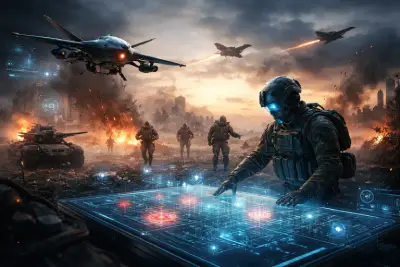
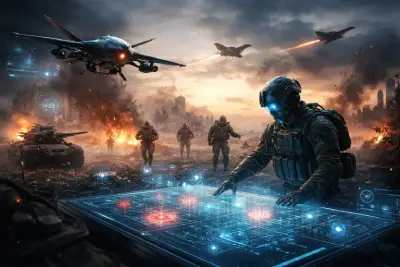
With the escalating military tension between the United States and Israel on one side and Iran on the other, artificial intelligence in wars has become one of the most prominent factors reshaping the nature of modern military conflicts. Technology is no longer limited to supporting logistics alone; it has now entered directly into analyzing military data, identifying targets, and even supporting attack decisions.
The debate around this role has intensified following reports that revealed the use of AI-based systems in certain military operations linked to the conflict with Iran.
AI Systems on the Battlefield
Modern armies are increasingly relying on advanced AI systems to analyze military intelligence at tremendous speed. Among the most notable of these systems is Maven Smart System, which uses image and data processing technologies to identify military targets and suggest attack priorities.
This system is used to analyze satellite images and drone footage, enabling targets to be located much faster compared to traditional methods.
Experts believe that military AI can give armies an unprecedented ability to make decisions in record time, which could change the rules of warfare entirely.
Does AI Reduce Civilian Casualties?
Some researchers believe that the use of AI could help increase the precision of military strikes and reduce human errors, which may limit the number of civilian casualties.
However, experiences in some recent conflicts such as the war in Ukraine and the war in Gaza have shown that the use of these technologies did not prevent a rise in civilian casualties. In fact, some experts argue that over-reliance on smart systems can sometimes lead to erroneous targeting decisions or unintended escalation of conflicts.
Autonomous Weapons.. The Most Dangerous Development in Wars — How Is AI Changing the Conflict Between Iran and America?
Among the most dangerous applications of AI in the military domain is the development of autonomous weapons, such as drones capable of identifying and attacking targets without direct human intervention.
Although this technology may grant armies speed and effectiveness in military operations, it raises widespread global controversy due to the ethical and legal concerns associated with it.
International humanitarian law emphasizes the necessity of human oversight over combat decisions to ensure distinction between military targets and civilians.
Dispute Between AI Companies and the U.S. Department of Defense
The dispute over the use of AI in warfare became clearly evident in the conflict between the U.S. Department of Defense and the company Anthropic, the developer of the AI system "Claude."
The company refused to remove certain restrictions that prevent the use of its technology in mass surveillance or the independent guidance of lethal weapons, which led the U.S. government to temporarily suspend its cooperation with the company.
In response, the Department of Defense turned to signing an agreement with OpenAI to use its technologies within a framework that defines the specific controls for the use of AI in military operations.
Global Concerns About an AI Arms Race
Many researchers warn that the world may soon witness a new arms race based on artificial intelligence, especially with the accelerating development of smart military systems.
International security experts are also calling for the urgent need to establish clear international laws to regulate the use of AI in wars, to prevent its use in autonomous combat systems that may make life-and-death decisions without human intervention.
However, these efforts face major challenges, particularly with the opposition of some major powers that possess advanced programs in military artificial intelligence.
The Future of Wars in the Age of Artificial Intelligence
Experts agree that AI will become a fundamental element in future wars, whether in intelligence analysis, drone operations, or supporting military decisions.
With the continued rapid pace of technological development, the greatest challenge facing the world remains establishing clear ethical and legal frameworks that ensure the final decision remains in human hands, not in the hands of algorithms. For everything new, follow Arabic websites and specialized blogs, alongside what is offered by Egyptian stores and Kuwaiti stores and vitamin stores and foreign websites, while relying on Mashhor website for social media services.