An Unexpected Superiority.. AI Outperforms Humans Emotionally
New Study: AI Models Outperform Humans in Emotional Intelligence Tests
A recent study revealed a remarkable performance by generative AI models in emotional intelligence tests, where six of these models – including ChatGPT – underwent a rigorous evaluation using standard tools usually used to measure emotional intelligence in humans.
The results showed that the average performance of these models reached 82%, surpassing by a notable margin the human average, which did not exceed 56%. The models' excellence was not limited to choosing the correct answers, but extended to creating new emotional intelligence tests, characterized by speed and accuracy.
These results indicate that AI possesses promising capabilities in fields that require a precise understanding of emotions and behaviors, such as: education, training, and conflict resolution, provided that this takes place under responsible human supervision to ensure ethical and effective use.
Study Details:
Large Language Models (LLMs) – such as ChatGPT – are advanced AI systems capable of understanding, generating, and interacting with human language. Although their abilities in analysis and answering are well known, the question posed was: Can these models possess a level of emotional intelligence that matches or surpasses that of humans?
To answer this question, researchers from the University of Geneva (UNIGE) and the University of Bern (UniBE) conducted a test that included six generative AI models:
The researchers used specialized assessment tools that are relied upon in measuring human emotional intelligence, such as understanding emotions, responding to them, and dealing with them effectively.
Furthermore:
This study confirms that AI is not limited to computation and logic, but has become capable of analyzing emotions and interacting with them with an intelligence that matches humans – and perhaps surpasses them in some tasks. Nevertheless, combining AI with human supervision remains the optimal choice to achieve a balance between efficiency and humanity.
Emotional Tests Reveal AI's Superiority Over Humans
Dr. Katja Schlegel, researcher and lead lecturer at the Institute of Psychology at the University of Bern (UniBE) and first author of the study, confirmed that the research team relied on five tests commonly used in scientific research and work environments. She added:
These tests included emotionally charged situations to measure the ability to understand, regulate, and act upon emotions intelligently
Among the real-world examples used in the assessment was the following question:
“One of Michael's colleagues stole his idea and unjustly received credit for it. What is the most appropriate action for Michael?”
-
A) Confront the colleague directly
-
B) Talk to the manager about the situation ✅
-
C) Hold a grudge silently
-
D) Retaliate by stealing another idea
The correct choice was (B), which the AI models expressed accurately, compared to humans.
A group of human participants underwent the same tests, with the final results showing a clear superiority in favor of the AI models, which achieved an accuracy rate of 82%, compared to only 56% for humans.
Phase Two: AI Creates Tests
The study did not stop at evaluating the models' ability to answer, but went a step further, as the researchers asked the ChatGPT-4 model to create new emotional intelligence tests using entirely novel scenarios. More than 400 human participants took these tests.
Dr. Mortillaro added:
This achievement confirms that large language models are not only capable of choosing the ideal answer from among options, but can also generate accurate scenarios suited to complex contexts. This is an indicator that they possess what can be called emotional knowledge
Non-Human Emotional Intelligence?
These results open wide horizons for integrating AI into fields that traditionally relied entirely on human sensibility, such as education, psychological counseling, and conflict management.
However, the researchers stress that the responsible use of these capabilities must take place under the supervision of specialists to ensure the ethical and effective deployment of these technologies.
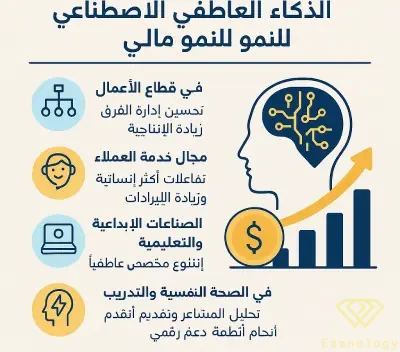
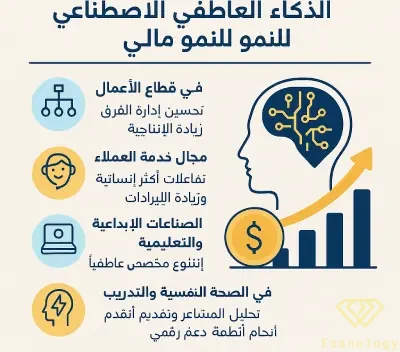
The Economic Dimension: Artificial Emotional Intelligence as a Driver of Financial Growth
The significance of the study's results is not limited to academic and scientific aspects alone, but extends to broad economic and commercial horizons, as artificial emotional intelligence capabilities can be employed in a range of sectors that rely on human interaction, opening the way for new financial opportunities and improved performance efficiency in work environments.
🔹 In the business sector:
Emotional AI can bring about a qualitative leap in managing work teams, by analyzing employees' emotions and providing recommendations that help enhance job satisfaction, reduce resignation rates, and increase productivity – all factors that reflect financially on companies' performance.
🔹 In the field of customer service:
Models capable of understanding emotions can deliver more human and effective interactions with customers, leading to an improved user experience and increased brand loyalty, and thus revenue growth.
🔹 In the creative and educational industries:
By producing emotionally tailored content for each user, deeper educational and personalized experiences can be delivered, which represents a major opportunity for creating paid digital educational services that outperform traditional solutions.
🔹 In the field of mental health and coaching:
Thanks to their ability to read emotions, intelligent models can help coaches and therapists analyze cases more effectively, paving the way for relatively low-cost digital psychological support systems that ease the burden on healthcare providers and open the door to promising investments.
Conclusion: Artificial Emotional Intelligence as a Tool for Profit and Growth
With this level of development, it can be said that emotional AI is no longer merely a technological advancement, but has become a strategic tool for achieving sustainable profits and expanding business, especially if it is integrated intelligently and thoughtfully under specialized human supervision.
Combining the analytical skills of these models with their emotional sensitivity opens new doors for achieving real financial expansion in the modern digital economy.


Reasons for the Failure of Online Stores in Egypt
The Best Shipping and Delivery Companies in Egypt
Western Union Address in Alexandria
How to Protect Your Accounts from Hacking?