Learn About the ATS System and Does It Really Help in the Hiring Process?

Learn About the ATS System and Does It Really Help in the Hiring Process?
The ATS System: Does Your Resume Pass Through the "Automated Hiring Gatekeeper"?
Remember the time when you thought writing a perfect resume was the biggest challenge? Then the ATS system appeared — that automated gatekeeper that decides whether your resume is "worthy" of reaching the eyes of hiring managers or not! Imagine it as the gatekeeper of the hiring world, but without feelings, relying entirely on algorithms to analyze and sort resumes.
In this article, we will lift the curtain on the ATS system, how it works, its key features, and the best strategies to make your resume successfully pass this smart filter!
What Is the ATS System?
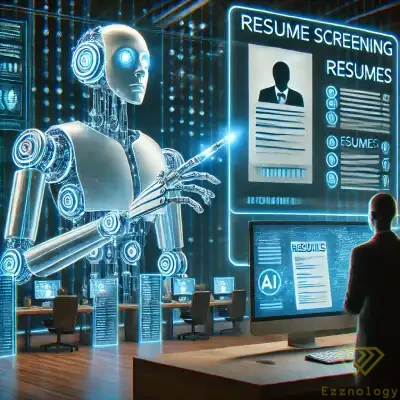
The ATS (Applicant Tracking System) is an artificial intelligence-based tool for filtering and sorting job applications, helping HR managers select the most suitable candidates quickly and accurately. This system scans resumes and analyzes their content based on keywords and pre-defined job requirements.
Why Do Companies Rely on ATS?
Companies and organizations use the ATS system for several reasons, most notably:
✅ Smart Candidate Filtering: The system scans and analyzes resumes in search of required skills and experience, reducing the time and effort spent on manually reviewing applications.
✅ Reducing Human Bias: The system relies on objective criteria, ensuring candidates are selected based on competence rather than subjective factors.
✅ Improving the Hiring Experience: Some ATS systems provide automatic updates to applicants about the status of their applications, making the process more transparent.
✅ Efficient Management of Applicant Data: The system allows hiring managers to access the candidate database at any time, making it easy to reconsider previous applicants when new opportunities arise.
How Does the ATS System Work?
When you submit your resume through a hiring platform, the ATS system automatically reviews it according to several criteria:
🔹 Keyword Analysis: The system searches for terms and skills that match the job description.
🔹 Data Classification: Key information such as education, experience, and skills is extracted.
🔹 Fit Determination: The degree to which your resume matches the job requirements is evaluated based on advanced algorithms.
🔹 Candidate Filtering: Resumes that do not meet the minimum specified criteria are excluded, and the most suitable ones are sent to hiring managers.
How to Make Your Resume ATS-Compatible?
If you want to pass this "automated gatekeeper," here are some golden tips:
🔹 Use the Right Keywords: Read the job description carefully and include the required skills and experience naturally in your resume.
🔹 Stick to Simple Formatting: Use DOCX or PDF files, and avoid tables, images, and complex designs that may hinder the system from reading your resume.
🔹 Use Clear Headings: Use labels such as "Work Experience", "Skills", "Education" to facilitate data analysis.
🔹 Avoid Vague Abbreviations: Write technical and professional terms in full to increase your chances of matching the job requirements.
Also
The ATS system has become a key tool in the modern hiring process, making it essential to tailor your resume to pass this smart filter. By choosing the right keywords and sticking to simple formatting, you can improve your chances of attracting the attention of hiring managers and successfully bypassing the "digital gatekeeper"!
How Does ATS Rank Job Applications?
After the ATS system scans and analyzes resumes, applications are ranked according to how well they match the job requirements and keywords specified in the job posting. These systems rely on advanced algorithms to evaluate content, so that the most suitable applications are given priority.
In some advanced systems, the evaluation is not limited to skills and experience alone, but extends to include writing style analysis, which helps measure the degree to which the candidate fits the company culture and its organizational values.
After ranking the applications, the best candidates are sent to hiring managers for manual review, which helps reduce the number of unqualified applications and speeds up the hiring process more efficiently.
Best ATS Systems on the Market
Whether you are a hiring manager or a job seeker, it is useful to know the best ATS systems currently available that major companies rely on in their hiring process. Here are the most notable ones:
1. BambooHR
BambooHR is one of the most popular applicant tracking systems, thanks to its simple interface and advanced analytical capabilities that help make hiring decisions quickly and accurately. This system is ideal for small and medium-sized companies, as it integrates various HR operations into a single platform.
📌 Success Story:
Swedish company Probi, specializing in biotechnology, previously relied on spreadsheets to manage employee data, which led to difficulties in tracking time and leave. After adopting BambooHR, the company was able to implement the system within just 4 weeks, which helped it improve performance management and payroll accuracy.
2. Workday
Workday is considered an ideal choice for large companies, as it features the ability to integrate with other HR systems. This system helps in automating hiring processes and providing accurate analytics on the performance of potential employees, enabling data-driven decision making.
3. Zoho Recruit
If you own a small or medium-sized company, Zoho Recruit provides you with smart search tools powered by artificial intelligence to find the most suitable candidates. The system supports the Arabic language, making it an ideal choice for companies in the Middle East and North Africa.
📌 Interesting Statistic:
Zoho Recruit recorded a growth rate of 70% in Saudi Arabia in 2021, reflecting the increasing reliance on ATS systems in the region.
How to Write an ATS-Compatible Resume?
If you want to pass the "automated hiring gatekeeper" and get a chance for a personal interview, here are the most important tips to follow when writing your resume:
✅ Use the Right Keywords: ATS systems rely on searching for specific terms, so make sure to match the keywords with those in the job description.
✅ Use Simple, Readable Formatting: Avoid using tables, icons, and complex designs that may hinder the system's analysis of your resume content.
✅ Use Clear Headings: Such as "Work Experience", "Skills", "Education", to facilitate automatic indexing and extraction of information.
✅ Avoid Unclear Abbreviations: Use full terms instead of abbreviated symbols, to ensure the system understands all details of your resume.
✅ Save the File in a Suitable Format: It is preferable to use DOCX or PDF to avoid any technical issues when ATS reads the document.
Also
ATS systems have become an integral part of modern hiring processes, making it essential to tailor your resume to pass this smart filter. By choosing the right keywords, sticking to a clear format, and avoiding common mistakes, you can increase your chances of reaching the next stage of the hiring process.
Golden Tips for Passing ATS Systems and Getting Your Dream Job
Have you ever felt that your resume disappears into the "black hole" of ATS systems? 🤔 Don't worry, there are smart ways you can follow to ensure you pass this automated filter and increase your chances of getting a job interview. Here are the most important strategies you should follow:
1️⃣ Don't Send the Same Resume for Every Job
✍️ Customizing your resume for each job is the key to success!
Make sure to take note of the keywords used in the job posting and include them in your resume naturally. For example, if the posting asks for experience in "project management," don't just mention "team organization" — use the same terms found in the job description.
2️⃣ Use Tools to Verify Your Resume's Compatibility with ATS
🔍 Want to know how strong your resume is against filtering systems? Use tools like Jobscan, which analyzes how well your resume matches the job requirements and provides you with suggestions for improvement.
3️⃣ Avoid Elements That ATS Cannot Read
🚫 Do not use:
❌ Complex tables and columns
❌ Symbols or icons
❌ Decorative fonts or unconventional designs
✅ Instead:
✔️ Use simple, organized formatting with clear headings like "Work Experience" and "Skills"
✔️ Choose an easy-to-read font like Arial or Calibri
✔️ Save the document in DOCX or PDF format to ensure it is read correctly
4️⃣ Don't Rely Only on ATS – Connect Directly with Hiring Managers
💡 Even if your resume is perfect, don't rely solely on the automated system! Connect with hiring managers through:
✅ LinkedIn: Send a professional message expressing your interest in the position
✅ Email: Introduce yourself directly and highlight your strengths
✅ Professional Networks: Ask about job opportunities within your professional network
📌 Additional Tip: After applying, try sending a message to the hiring manager letting them know you applied for the position and explaining how your skills can add value to the company.