What is blob storage?
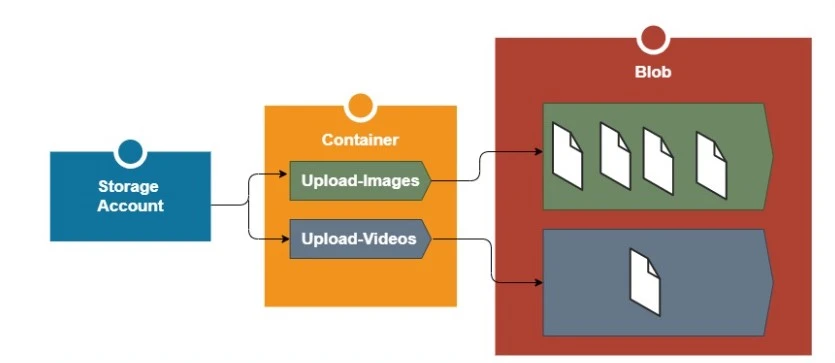
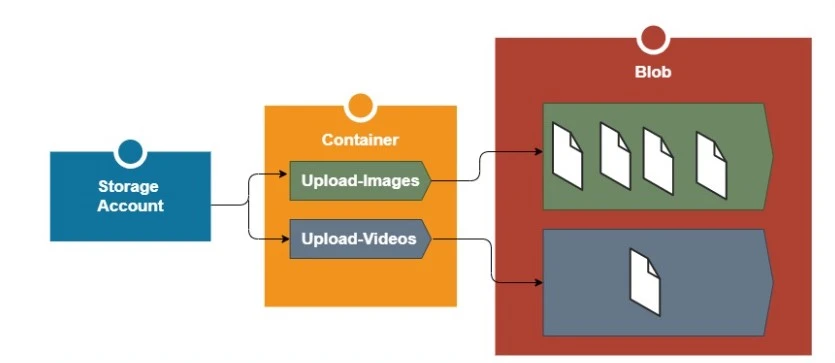
Blob storage is a type of cloud storage for unstructured data. “Blob,” which stands for Binary Large Object, is a chunk of data in binary form that does not necessarily conform to any file format. Blob storage keeps these chunks of data in non-hierarchical storage areas called data lakes.
Also:
Imagine Alice stores her clothes in an organized, ready-to-wear wardrobe, while Bob simply throws his clothes into a pile. Bob’s method is similar to blob storage: any piece of clothing can be tossed into his pile, and the clothes don’t need to be organized in any particular way. Bob’s method is useful in that he can grow his pile quickly and almost endlessly — he can just keep throwing more in, rather than folding and organizing like Alice.
Also:
Although Bob’s clothing storage method makes it difficult to quickly locate specific garment items, many organizations need a similar data storage approach. They have a lot of data and need to store large amounts of it without organizing it into a hierarchy or fitting it into a specific format.
Also:
Blob storage allows developers to create data lakes for cloud-based and mobile applications. Blob storage is particularly useful for storing media, large file backups, and data logs. However, it can be used for anything – even files that would normally go into a more hierarchical database.
What is object storage?
Blob storage is a type of object storage. Object storage keeps files or blobs in a flat “data lake” or “pool” without a hierarchy; the data lake/pool is a large collection of unstructured data. Object storage contrasts with file storage and block storage:
- File storage keeps data in a hierarchical file structure of folders, directories, subdirectories, etc.
- Block storage keeps data in equal-sized chunks of data called “blocks.”
Often
file and block storage are not flexible enough or scalable enough for modern organizations. In contrast, object storage is so scalable that some consider it “unlimited” storage. However, using object storage instead of file or block storage can make data retrieval more complex.
What is a blob?
A Binary Large Object (blob) is a collection of data of arbitrary size. Blobs do not have to follow a specific format or have any associated metadata. They are a string of bytes, where each byte consists of 8 bits (1 or 0, hence the description “binary”). Any type of data can be transmitted in a blob.
In some applications, blobs are stored in containers. A container is a portion of a computer’s user-space environment that has been isolated from the rest of the computer. Containers are a widely used form of cloud computing. As the name implies, containers are self-contained – they store all the dependencies they need, along with any files and applications they hold.
What are the advantages of blob storage?
Scalable: Blob storage capacity is virtually unlimited. As the volume of stored data grows, saving data remains easy and quick to retrieve later.
Cloud-native: Blob storage is hosted in the cloud. This makes blob storage naturally suited for organizations that are building on or migrating to the cloud. This also means that blob storage can be accessed from anywhere via the internet, as with all cloud services.
Programming language agnostic: Blob storage providers typically allow developers to use a wide range of languages to access their blobs.
Cost-effective: Blob storage typically has tiered pricing. Data that is rarely accessed is placed at a much cheaper tier, meaning large amounts of data can generally be stored at lower cost if most of it is not accessed regularly.
What are the best use cases for blob storage?
Some of the key use cases for blob storage include the following:
- Media: Image, video, and audio data takes up a lot of space and sometimes needs to be stored but not necessarily accessed regularly.
- Logs: During program execution, it continuously generates a series of events that can be recorded in logs for later analysis. The volume of this data can grow quickly. Blob storage enables fast and cheap storage of this data in unstructured form. However, blob storage is less cost-effective for this use case. Any query of log data will incur egress charges.
- Backups and disaster recovery: Most organizations need to maintain complete backups, especially for recovery from ransomware attacks. Since this data duplicates production data and is rarely accessed, blob storage is perfectly suited for backing up large datasets.
How does blob storage relate to key-value storage?
Key-value storage is a method of finding objects in a database or data lake, where each object is given a unique “key” to identify it. The key-value approach is well-suited for object storage and blob storage because the lookup mechanism does not need to know anything about the value or object it is searching for. (In contrast, file storage searches via fields, metadata, etc.) All it needs to find the value is the key associated with the object.
Are there security risks associated with blob storage?
Any type of cloud storage must be protected against data leaks, breaches, and unauthorized access. Blob storage vendors provide a certain level of protection, but cloud security configurations are often left to the customer. Strong cloud security implementations are essential for keeping blob storage secure.
And with that, my friend, we have successfully completed the mission 
With greetings from the #Ezznology team
Find what interests you at #our store
To subscribe to our newsletter on Google News click here 👇👇

Or scan the code

You may also be interested in:
Simple Mail Transfer Protocol (SMTP)?
What is the cloud? | Cloud definition | What does the word cloud mean