What is Round Trip Time? | RTT Definition
Round Trip Time (RTT) is the duration in milliseconds (ms) that a network request takes to travel from its starting point to its destination and back again to the starting point.
What is Round Trip Time?
Round Trip Time (RTT) is the duration in milliseconds (ms) that a network request takes to travel from its starting point to its destination and back again to the starting point. RTT is an important metric in determining the health of a connection on a local network or the broader internet, and it is commonly used by network administrators to diagnose the speed and reliability of network connections.
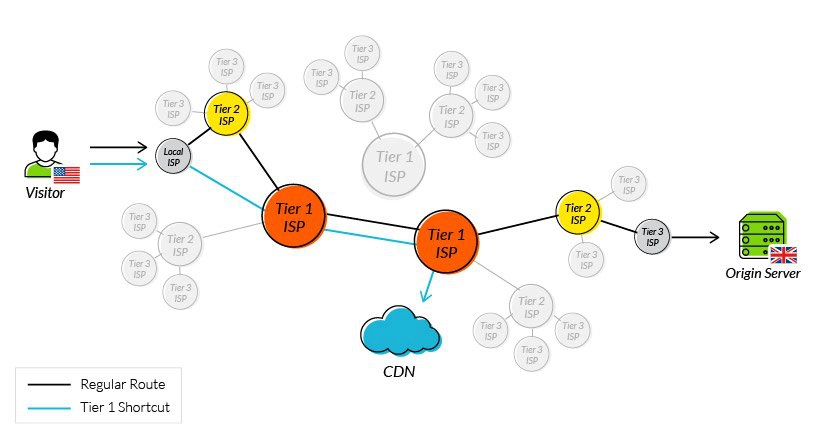
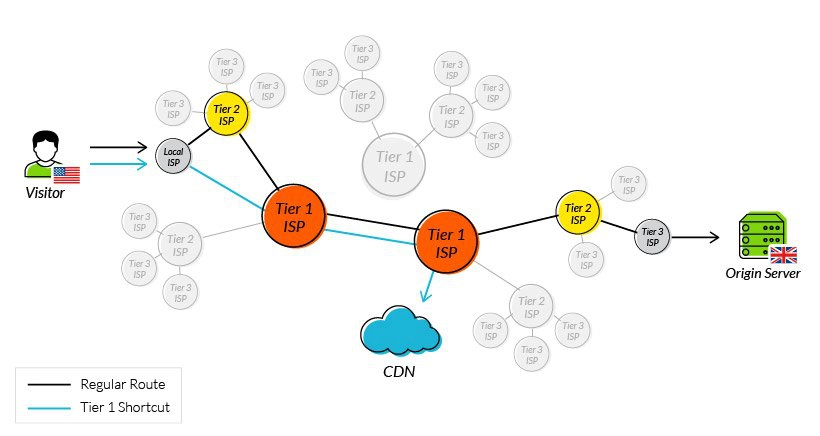
Minimizing Round Trip Time (RTT) is a primary goal for a CDN network. Improvements in latency can be measured by reducing round trip time and by eliminating cases that require round trips, such as modifying the standard TLS/SSL handshake.
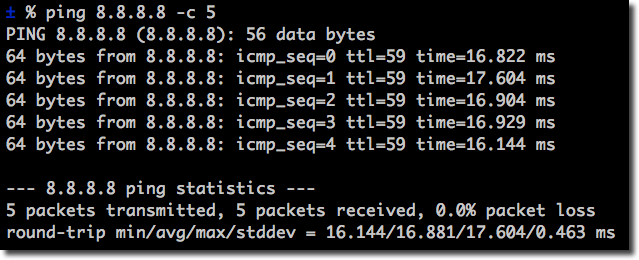
The ping tool, available on nearly all computers, is a method for estimating round trip time. Below is an example of several ping checks to Google with the calculated round trip time shown at the bottom. Note that one of the ping times – 17.604 ms – is higher than the rest.
How Does Round Trip Time Work?
Round trip time represents the amount of time it takes for data to travel round trip to another location. Borrowing from the CDN latency benefits lesson, let's assume a user in New York wants to connect to a server in Singapore.
When the user in New York makes the request, network traffic is transmitted through many different routers at different physical locations before it ends up at the server in Singapore. The server in Singapore then sends a response across the internet to the location in New York. Once the request is completed in New York, a rough estimate can be made of how much time it took to travel round trip between the two locations.
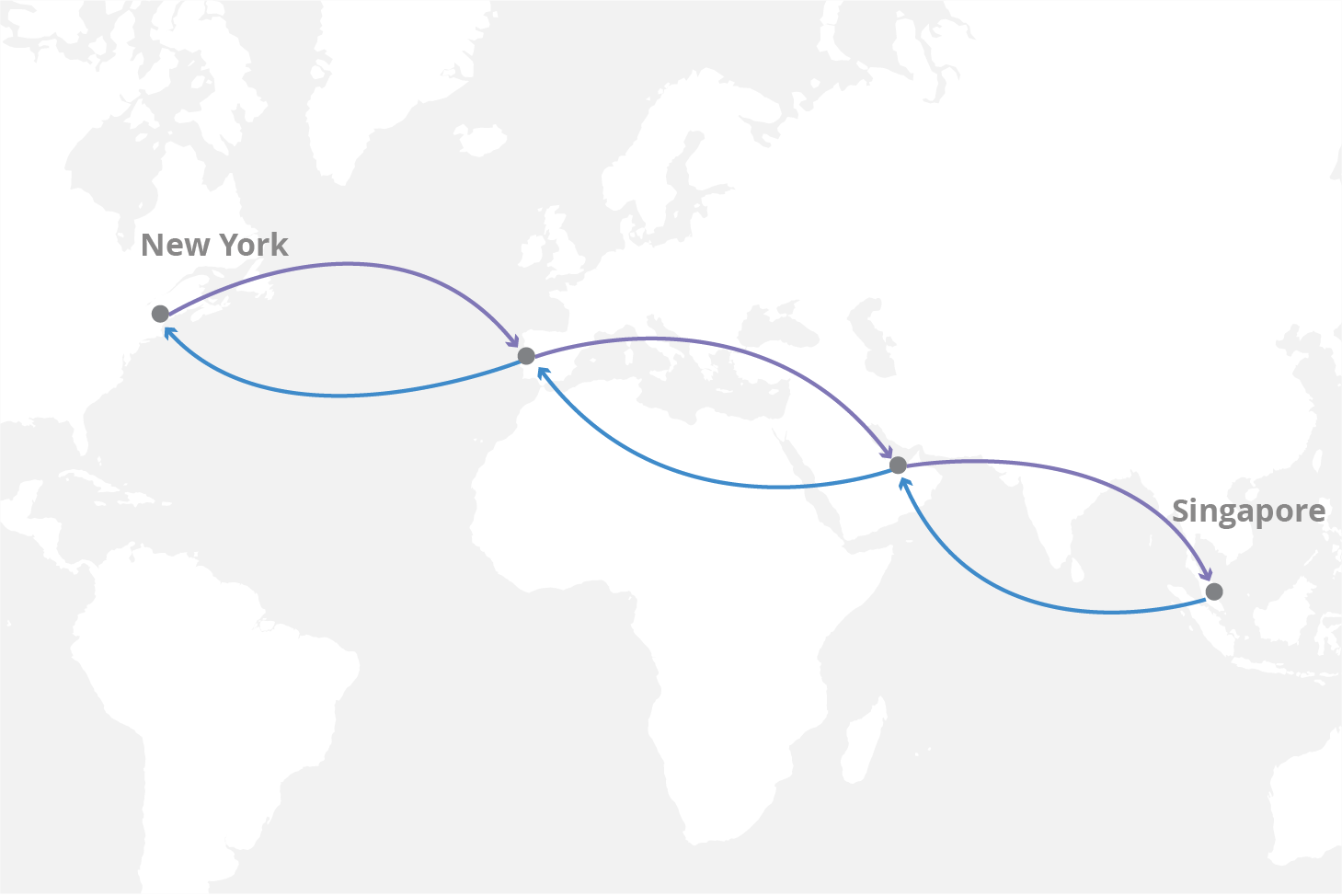
It is important to keep in mind that round trip time is an estimate, not a guarantee; the path between two locations can change over time and other factors such as network congestion can play a role, affecting the overall transit time. Regardless, RTT is an important metric in understanding whether a connection can be made, and if so, approximately how long the trip will take.
What Are the Common Factors That Affect RTT?
Infrastructure components, network traffic, and the physical distance along the path between the source and destination are all potential factors that can affect RTT.
List of Factors That Affect RTT:
- Nature of the transmission medium – The way in which communications are conducted affects the speed at which the connection moves; links carried over fiber optics will behave differently from links made over copper. Similarly, a connection made over radio frequency will behave differently from one made via satellite.
- Local Area Network (LAN) traffic – The volume of traffic on the local network can bottleneck the connection before it reaches the broader internet; for example, if many users are using a video streaming service simultaneously, round trip time may be impeded even though the external network has surplus capacity and is operating normally.
- Server response time – The amount of time it takes a server to process a request and respond represents a potential obstacle in network latency; when a server is overwhelmed with requests, as during a DDoS attack, its ability to respond efficiently can be hindered, leading to increased RTT.
- Number of nodes and congestion – Depending on the path the connection takes across the internet, it may be routed or “hop” through a varying number of intermediate nodes. Generally, the more nodes a connection touches, the slower it will be. A node may also experience network congestion due to other network traffic, slowing the connection and increasing round trip time.
- Physical distance – Although a CDN-optimized connection can often reduce the number of hops required to reach a destination, there is no way around the limitations imposed by the speed of light; the distance between the starting point and the endpoint is a limiting factor in network connectivity that can only be reduced by moving content closer to the requesting users. To overcome this obstacle, a CDN will cache content close to requesting users, thereby reducing RTT.
How Can a CDN Improve RTT?
By maintaining servers within internet exchange points and through having preferred relationships with internet service providers and other network carriers, a CDN is able to optimize network paths between locations, resulting in reduced RTT and improved latency for visitors accessing content cached within the CDN.
Explore the CDN performance lesson to learn how caching,
data center placement, file size reduction, and other optimizations reduce latency and improve RTT. Learn how CDN is used to improve RTT.