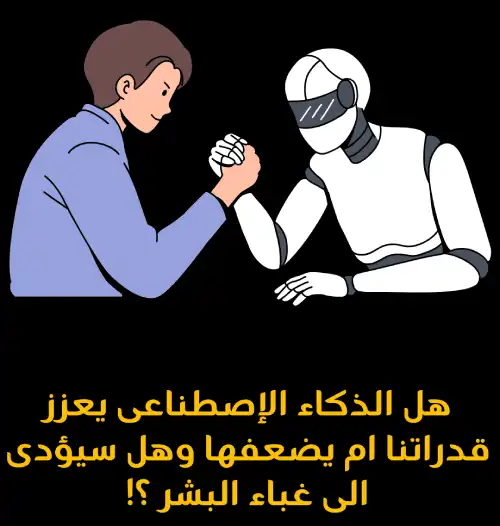
Does Artificial Intelligence Enhance Our Abilities or Weaken Them — And Will It Lead to Human Stupidity?!
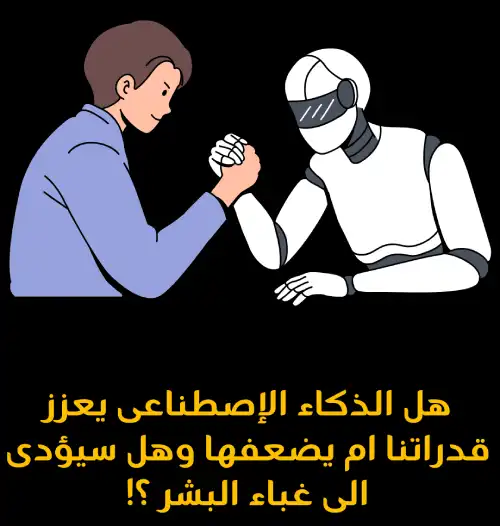
Does Artificial Intelligence Enhance Our Abilities or Weaken Them — And Will It Lead to Human Stupidity?!
Technology and the Challenge to Human Memory: Are We on the Threshold of "Cognitive Atrophy"?
Few of us are capable of tackling simple mental challenges without resorting to external tools. Imagine, for example, trying to perform a mental calculation without using paper or a calculator, or picture carrying out a daily task like weekly grocery shopping without writing your list on your phone or a piece of paper. How many items would you be able to remember before your mind collapses under the pressure of forgetting?
These scenarios are not mere passing tests; they shed light on a fundamental question of our era: Has excessive reliance on technology become a double-edged sword? While smart devices make our lives easier, they unconsciously push us to delegate core cognitive tasks, raising concerns about a decline in mental capabilities such as short-term memory, analytical thinking, and even creativity.
Generative AI: A Catalyst for Progress or a Threat to Mental Abilities?
These questions are no longer mere philosophical debates; they have become an urgent issue in the wake of the recent technological boom, especially with the rise of generative AI tools such as ChatGPT, developed by OpenAI, which is now used by 400 million people weekly according to the latest statistics. These technologies provide instant answers, organize data, and even generate complex texts, but in return they tempt users to abandon basic mental operations, such as:
- Logical reasoning for problem-solving.
- Deep concentration for absorbing information.
- Critical thinking for distinguishing right from wrong.
Between Efficiency and Dependence: Where Does the Balance Lie?
No one denies that technology has enhanced our efficiency in completing routine tasks and saved precious time that can be invested in higher-value activities. However, studies point to a phenomenon called "technological cognitive atrophy," where the brain becomes accustomed to receiving information ready-made, which weakens the neural connections responsible for deep learning. For instance, research has found that reliance on GPS reduces the size of the hippocampus (the brain region associated with spatial memory), while the use of calculators impedes the development of children's mental arithmetic skills.
The Future of the Human Mind in the Age of Intelligent Machines
Experts propose contrasting scenarios:
- The Integration Scenario: Technology enhances mental capabilities by freeing the mind from repetitive tasks, allowing it to focus on creativity and solving complex problems.
- The Dependency Scenario: The human brain becomes incapable of functioning without external support, threatening a decline in individual intelligence.
Amid this debate, the need for balancing strategies becomes evident, such as:
- Regularly training the brain with mental challenges (such as solving puzzles or learning a new language).
- Identifying tasks that must be performed manually without digital assistance.
- Developing educational systems that foster critical thinking alongside the use of technology.
Technology Is a Tool… and Human Will Is the Deciding Factor
The real challenge does not lie in technology itself, but in how we employ it to enhance — not replace — our mental capabilities. Just as muscles weaken without exercise, the mind loses its flexibility without continuous stimulation. In the end, the question remains: Will we allow ourselves to be passive consumers of AI products, or will we transform into smart partners who use them as a platform to elevate human potential to unprecedented horizons?
Note: The statistics mentioned regarding the number of ChatGPT users are based on publicly announced data up to the date of writing this article, and the figures may differ with the company's future updates.
The Impact of Generative AI on Cognitive Abilities: An In-Depth Analytical Perspective
A recent study conducted by researchers from Microsoft and Carnegie Mellon University has revealed a complex relationship between generative AI and human cognitive abilities. The study's findings point to mixed effects: the use of these technologies can lead to a decline in certain cognitive abilities, while simultaneously offering tangible benefits in other areas. These contradictory findings raise fundamental questions about the ideal balance between harnessing the potential of AI and preserving our own mental capabilities.
This study offers deep insights into the impact of generative AI on critical thinking processes and problem-solving mechanisms, highlighting the importance of developing effective strategies to maximize the benefits and minimize the risks associated with these advanced technologies.
In this article, we review the study's findings in detail, analyze the impact of AI on our cognitive abilities, and attempt to answer the pivotal question: Is AI leading us toward a future characterized by higher levels of human intelligence, or the opposite?
Standards of Effective Thinking in the Age of AI
The researchers in this study sought to evaluate the impact of generative AI technologies on users' critical thinking skills. Critical thinking is scientifically defined as the ability to think in an effective and high-quality manner, achieved by applying specific standards including: accuracy, clarity, correctness, comprehensiveness, depth, relevance, and the strength of logical arguments.
However, the quality of thinking does not rely exclusively on these abstract standards; there are other factors that interact in the cognitive process, including:
- The influence of worldviews and cultural backgrounds formed during our developmental stages
- Ingrained cognitive biases that may unconsciously distort our perceptions
- Reliance on mental models that may be incomplete or misleading
These elements add multiple layers of complexity to our thinking processes and our assessment of the surrounding world.
Bloom's Taxonomy and AI
The study relied on Benjamin Bloom and colleagues' taxonomy (1956), a hierarchical framework that divides cognitive skills into six progressive levels:
- Recall of information
- Understanding
- Application
- Analysis
- Synthesis
- Evaluation
The researchers chose this taxonomy for its simplicity and ease of application, despite its declining popularity in contemporary academic circles. This taxonomy has faced considerable criticism from prominent researchers such as Robert Marzano, and even from Bloom himself in later periods of his academic career.
The main criticism centers on the assumption of a rigid hierarchical sequence of skills, whereby higher-level skills depend on lower-level ones. This assumption does not always align with practical reality, as the process of evaluation — typically classified as a high-level skill — can be a starting point for inquiry in some contexts, or a relatively simple process in others. Context plays a pivotal role in determining the course of thinking, not just abstract cognitive abilities.
A Methodological Issue
One of the methodological issues in the study lies in the fact that many generative AI models use Bloom's taxonomy as a reference framework to guide their outputs. This raises a fundamental question: Does the study objectively measure the impact of AI on users' critical thinking, or does it simply measure how effective AI — in its current design — is at directing users to adopt a thinking pattern consistent with Bloom's model?
Furthermore, Bloom's taxonomy overlooks a fundamental element of genuine critical thinking: the thinker's internal motivation. A critical thinker does not merely apply cognitive skills; they practice them at a high quality driven by a deep concern for reaching the truth — an authentically human trait that AI systems have yet to possess.
Findings of Recent Studies on Critical Thinking and AI
Recently published research has revealed a notable negative correlation between intensive use of AI tools and the capacity for critical thinking. This finding served as the starting point for the current study, which sought to deepen our understanding of this relationship through more comprehensive research.
Research Methodology and Target Sample
The study relied on a survey that included 319 professionals from various knowledge sectors, among them:
- Medical staff (doctors and nurses) in the healthcare sector
- Teachers and academics in the educational field
- Engineers and technicians in technology industries
The participants engaged in detailed discussions of 936 professional tasks they had completed using generative AI technologies, providing the researchers with rich data to analyze patterns of human-machine interaction in specialized professional contexts.
The Discovered Paradox: A Shift in Critical Thinking Patterns
The findings revealed a noteworthy paradox in the behavior of professional users:
- Decreased critical thinking during the initial phase of using AI tools
- Increased critical thinking during the stages of verifying, auditing, and editing outputs
This means that initial reliance on AI to complete the core work initially reduces critical thinking, then demands higher levels of critical human intervention later to ensure the quality of the final outputs.
Triggers of Critical Thinking in High-Stakes Work Environments
In high-stakes professional environments — such as hospitals and sensitive engineering projects — the researchers identified two main drivers that push users to activate their critical thinking:
- The pursuit of high quality: commitment to achieving results that meet rigorous professional standards
- Fear of negative consequences: concern about criticism or legal repercussions in the event of failure
These two factors motivate specialists to review AI outputs with great care, thereby raising the level of critical scrutiny applied to results.
The Relationship Between Confidence and Critical Thinking
The study revealed a close relationship between confidence levels and critical thinking:
- Users with high confidence in AI showed lower levels of critical thinking
- Users confident in their own abilities exercised higher levels of critical thinking
This disparity indicates that the effect of generative AI on critical thinking is neither inevitable nor uniform, but depends significantly on the user's cognitive background and the degree to which they have mastered critical thinking skills before engaging with these technologies.
Strategies for Enhancing Critical Thinking in the Age of AI
The study implicitly emphasizes the importance of activating critical thinking during the oversight phase of AI outputs. Building on this insight, the researchers offer important recommendations for both AI developers and users alike.
Recommendations for AI Developers
The researchers propose integrating innovative features into generative AI systems specifically designed to encourage users to exercise critical oversight more effectively, through:
- Developing alert mechanisms that encourage users to scrutinize outputs
- Providing tools to assist in evaluating results against objective criteria
- Designing interactive interfaces that promote the user's active participation in the thinking process
Toward Comprehensive and Continuous Critical Thinking
But the fundamental question remains: Is merely activating critical thinking during the oversight phase sufficient to address the problem?
The answer lies in the necessity of adopting a comprehensive critical thinking methodology that goes beyond the final review stage, encompassing the entire cycle of interaction with AI:
- The initial formulation phase: Critical thinking in framing questions and hypotheses before using the tool
- The active use phase: Awareness of how the tool works and its limitations during use
- The results evaluation phase: Examining outputs to detect any biases or systematic errors
Developing Critical Thinking Skills: An Integrated Path
The only guarantee against generative AI undermining our cognitive abilities is having a solid foundation in critical thinking skills before engaging with these technologies. These skills include:
- Identifying implicit assumptions underlying claims and challenging them in a scientific manner
- Intellectual openness to explore multiple perspectives, even those that contradict personal convictions
- Systematic and structured thinking that relies on evidence and proof rather than impressions
- Intellectual collaboration with others to exchange ideas and develop insights
AI as an Assistive Tool for Critical Thinking
Just as traditional tools like blackboards and chalk contributed to developing our mathematical abilities, generative AI — if used consciously — can enhance our critical thinking capabilities. It can be employed as a tool to:
- Challenge our personal assumptions and subject them to testing
- Offer multiple perspectives on complex issues
- Simulate diverse cognitive scenarios
However, this positive utilization requires a deep awareness that advanced technologies do not substitute for the personal effort required to develop cognitive abilities. The initiative remains in our hands to ensure the independence and vitality of our thinking in an era of increasing machine dominance over the cognitive landscape.
Finally
The study presents a balanced view of the impact of generative AI on human cognitive abilities. While unconscious use of these technologies can lead to a decline in certain cognitive skills, it is also possible — through responsible and critical use — to transform them into effective tools for enhancing critical thinking and expanding the horizons of human knowledge.
The future is not inevitably headed toward a decline or enhancement of human intelligence; it depends on how we choose to interact with these technologies. The key lies in adopting a methodology that balances harnessing the potential of AI with preserving the independence and depth of human thought.
And with this, dear brothers and sisters, we have successfully completed our mission ✌
Send blessings upon the beloved, and your hearts will be purified — do good no matter how small 🎯🌷
And do not forget our brothers everywhere in your prayers 📌
Greetings from the team #Ezznology #Ezz_Technology
You can also browse our store's products from here 👈#our store 🌷or here
To join our family on the Telegram group click 👈here
And also our Facebook group where we share information and help members 👈here
To subscribe to our newsletter on Google News press here✌👇

Or scan the code