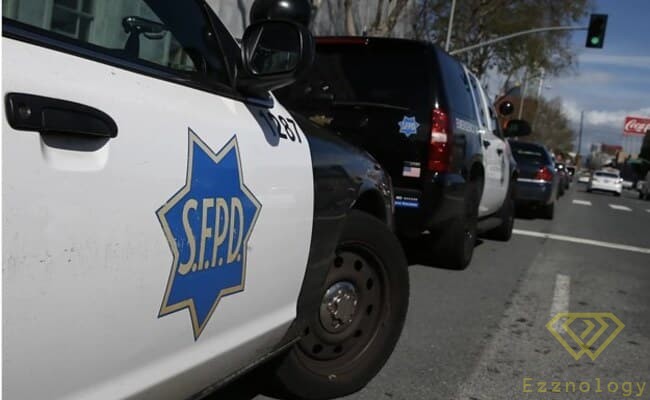
San Francisco Police Department Begins Encrypting Radio Transmissions:
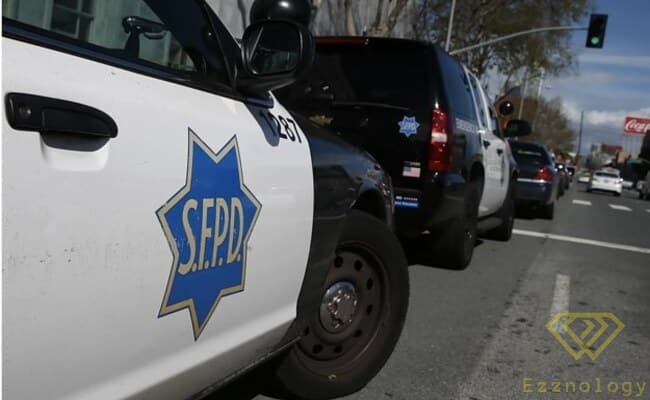
The San Francisco Police Department announced that it has begun encrypting all wireless communications between its officers,
marking what is effectively the first time since radio technology was widely adopted in the early twentieth century that such transmissions have been made inaccessible to the public.
The department confirmed that it has issued a new encryption protocol in accordance with a mandate from the California Department of Justice to protect personally identifiable information.
Amateur radio enthusiasts were the first to notice the change, when Desmond Crais, a technology enthusiast based in San Francisco, observed that the police frequencies he regularly monitored had gone silent.
The police channels he used to listen to had suddenly gone quiet!!
Also
Crais was accustomed to monitoring local police channels to watch for nearby incidents
and public safety threats, and now most of the messages transmitted by the police
have disappeared under the protection of encryption.
San Francisco Police Department spokesperson “Adam Lobsinger” stated that all police department traffic has been encrypted,
and virtually no police radio communications will be heard from now on.
What remains unencrypted at this time is on the side of the Emergency Management Department,
which routes 911 calls to police or
fire units, and is working on developing a protocol to encrypt some of its outgoing messages as well.
Communications between the San Francisco Police Department and the Emergency Management
Department could previously be heard, and that will no longer be possible. The public also cannot access
the law enforcement and procedural side of those exchanged messages.
The department’s adoption of this broad encryption has prevented enthusiasts like Crais,
journalists, and audio monitoring platforms from tracking even routine or standard police operations.
This is part of a growing trend among law enforcement agencies across the United States
that has raised concerns among government transparency advocates.
Police in Illinois, Minnesota, Virginia, and other states have also significantly encrypted
their wireless communications in recent times. Privacy law experts say that blanket encryption is an
excessive response to perceived threats, and that police radio traffic is an essential and indispensable public resource.
These wireless transmissions also serve as an important window for the public to follow police movements and activities.
The San Francisco Police Department has framed the incoming encryption as a partial measure and an update to current practices,
rather than a complete blackout of all radio traffic.
This Step Is Part of a Broader Trend to Encrypt Agency Communications
The agency announced in June that it is committed to transparency as permitted by law and in the public interest
by not encrypting all of its channels.
However, in order to limit the transmission of personally identifiable information, the agency encrypts portions of its wireless traffic and messages that may contain
sensitive data that cannot be made available to the general public, including discussions related to sexual assault or domestic violence.
Amateur monitoring prompted the department to transition from an analog radio system to a digital one in November, and the
department replaced its approximately twenty-year-old legacy system with a newer version that provides broader coverage while also delivering
clearer audio and compliance with interoperability standards.
The disappearance of police channels was noticed through the Citizen crime-monitoring app, which relies on these transmissions to send incident alerts and breaking news.
The company confirmed that police messages are no longer appearing through the app in the San Francisco area. The company’s spokesperson initially believed
this was an app malfunction, and clarified: we have reached out to law enforcement authorities regarding the disruption in public access to radio broadcasts in San Francisco.
He also added: we look forward to working with them to ensure that media outlets and safety technology like the Citizen app keep people informed
about public safety in the city. Quick access to this information can save lives and help make content both relevant and easily accessible.
A spokesperson for the U.S. Department of Justice stated: personally identifiable information must be protected when it is broadcast by law enforcement agencies over
the radio, and agencies can achieve this through policies that selectively secure sensitive information, while still allowing the continued
flow of other wireless communications, in a manner consistent with the required implementation.
San Francisco Police Department Begins Encrypting Radio Transmissions:
Read More Also About:
- Detecting Computer Viruses Without Specialized Software
- Launch of Xiaomi 12 — The First Flagship Phone of 2022
- What Is the Neuralink Chip That Elon Musk Plans to Implant in Human Brains in 2022
- Unlock Roblox | Unlocking All Game Stages “Christmas”
- Exynos 2200 — A New Processor from Samsung
- Smart Home Devices at CES 22