What Is a Top-Level Domain?
Top-level domains appear at the end of domain names, and they are important for classifying domain names as well as being essential for DNS lookup operations.
What Is a Top-Level Domain (TLD)?
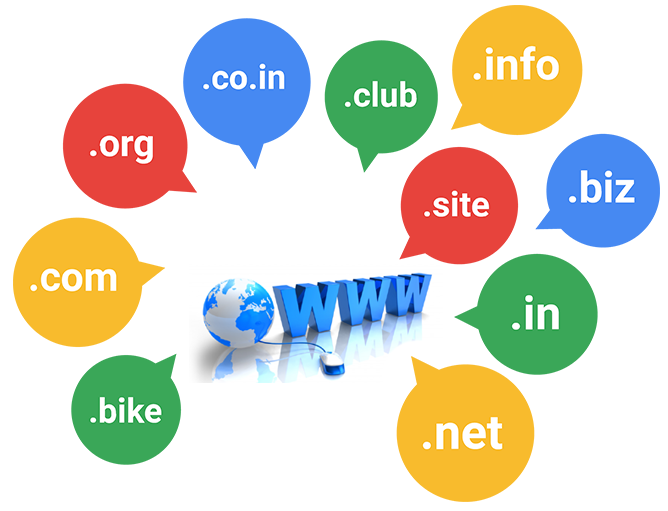
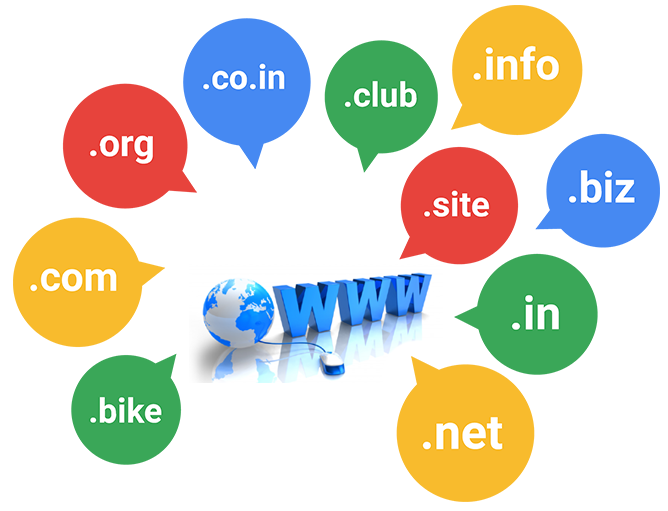
In the hierarchy of the Domain Name System, a top-level domain (TLD) is the first stop after the root zone. In simpler terms, a TLD is everything that follows the final dot in a domain name. For example, in the domain name “google.com”, “.com” is the TLD. Some other common TLDs include “.org”, “.uk”, and “.edu”.
TLDs play an important role in the DNS lookup process. For all non-cached requests, when a user enters a domain name such as “google.com” in the browser window, the DNS resolver begins its search by contacting the TLD server. In this case, the TLD is “.com”, so the resolver will contact the .com TLD DNS server, which will provide the resolver with the IP address of Google’s authoritative server.
The Internet Corporation for Assigned Names and Numbers (ICANN) has authority over all TLDs used on the Internet, and delegates responsibility for these TLDs to various organizations. For example, an American company called VeriSign operates all “.com” and “.net” TLDs.
Another purpose of TLDs is to help classify and communicate the purpose of domain names. Each TLD tells you something about the domain that precedes it; let’s look at some examples:
- “.com” is intended for commercial businesses.
- “.gov” is intended for U.S. government entities.
- “.uk” is for domains from the United Kingdom.
TLDs themselves are also classified into one of several groups.
What Are the Different Types of TLDs?
- Generic TLDs: Generic TLDs (gTLDs) include some of the most common domain name endings seen on the web, such as “.com”, “.net”, and “.org”. ICANN used to strictly restrict the creation of new gTLDs, but in 2010 these restrictions were eased. There are now hundreds of less well-known gTLDs, such as “.top”, “.xyz”, and “.loan”.
- Country-Code TLDs: Country-code TLDs (ccTLDs) are reserved for use by countries, sovereign states, and territories. Some examples are “.uk”, “.au” (Australia), and “.jp” (Japan). The Internet Assigned Numbers Authority (IANA), managed by ICANN, is responsible for selecting the appropriate organizations in each location to administer ccTLDs.
- Sponsored TLDs: These TLDs typically represent professional, ethnic, or geographic communities. Each sponsored TLD (sTLD) has a designated sponsor representing that community. For example, “.app” is a TLD dedicated to the developer community, sponsored by Google. Similarly, “.gov” is intended for use by the U.S. government and is sponsored by the General Services Administration.
- Infrastructure TLDs: This category contains only one TLD: “.arpa”. Named after DARPA, the U.S. military research organization that helped pioneer the modern Internet, “.arpa” was the first TLD ever created and is now dedicated to infrastructure tasks, such as facilitating reverse DNS lookups.
- Reserved TLDs: Some TLDs exist on a reserved list, meaning they are permanently unavailable for use. For example, “.localhost” is reserved for local computer environments, and “.example” is reserved for use in illustrative examples.
Do TLDs Matter?
There are now so many available TLD options that the choice can be overwhelming for someone trying to register a new domain name. For years, “.com” was seen as the only option for businesses that wanted to be taken seriously. But experts predict that as the supply of “.com” domains dwindles and some of the newer TLDs continue to gain traction, we will see a significant shift in the perception of alternative TLDs. With large companies like Twitter and Apple beginning to adopt alternative TLDs for their products (t.co and itun.es, respectively), we are already witnessing this shift in action, so it may be better to create a smart and memorable domain name using an alternative TLD, rather than insisting on a “.com” domain.
And with that, my friend, we have successfully completed our mission 
With greetings from the #Ezznology team
Find what you need at #our store
To subscribe to our newsletter on Google News, click here 👇👇
Or scan the QR code