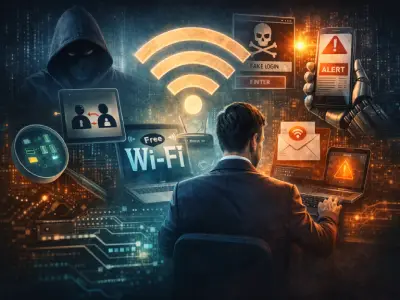
What is Hacking?
And How Do We Prevent It and Protect Ourselves from Breaches?
The Concept of Cyber Attacks and Ways to Prevent Them

Definition of Hacking
Hacking is the process of identifying weaknesses in a computer system or network and then exploiting them, usually to gain unauthorized access to personal or organizational data. Hacking is not always a harmful activity, but the term carries mostly negative connotations due to its association with cybercrime.
How Does Hacking Work?
So, how do hackers breach systems? Hackers use a variety of techniques to achieve their goals. Some of the most common methods include the following:
Social Engineering
Social engineering is a manipulation technique designed to exploit human error to gain access to personal information. Using a fake identity and various psychological tricks, hackers can deceive you into revealing personal or financial information. They may rely on phishing scams, spam emails, instant messages, or even fake websites to accomplish this.
Password Cracking
Hackers use various methods to obtain passwords. The trial-and-error method is known as a brute-force attack, which involves hackers attempting to guess every possible combination to gain access. Hackers may also use simple algorithms to generate different combinations of letters, numbers, and symbols to help them identify password combinations. Another technique is known as a dictionary attack, which is a program that plugs common words into password fields to find out if any of them work.
Infecting Devices with Malware
Hackers may infiltrate a user's device to install malware. They will most likely target potential victims via email, instant messages, websites with downloadable content, or peer-to-peer networks.
Exploiting Unsecured Wireless Networks
Rather than using malicious code to infiltrate someone's computer, hackers may simply exploit open wireless networks. Not everyone secures their router, and this can be exploited by hackers who roam around looking for an open, unsecured wireless connection. This activity is known as war driving. Once hackers connect to the unsecured network, they only need to bypass basic security to access the devices connected to that network.
Gaining Backdoor Access
Hackers may create programs that search for unprotected pathways in network systems and computers. Hackers may gain backdoor access by infecting a computer or system with a Trojan horse, created by hackers to obtain and steal important data without the victim noticing.
Email Eavesdropping
Hackers can create code that allows them to intercept and read emails. Most email programs today use encryption equations, which means that even if hackers intercept a message, they will be unable to read it.
Keystroke Logging
Some programs allow hackers to track every keystroke made by a computer user. Once installed on the victim's computer, the programs record every keystroke, giving the hacker everything they need to infiltrate a system or steal someone's identity.
Creating Zombie Computers
A zombie computer, or bot, is a computer that a hacker can use to send spam or carry out Distributed Denial of Service (DDoS) attacks. After a victim executes seemingly innocent code, a connection is opened between their computer and the hacker's system. The hacker can then secretly control the victim's computer, using it to commit crimes or spread spam.
What Damage Can Hackers Do?
Cybersecurity hacking can cause real havoc. Whatever technique hackers use, once they gain access to your data or devices, they can:
- Steal your money and open credit card and bank accounts in your name
- Destroy your credit rating
- Request new account PINs or additional credit cards
- Make purchases on your behalf
- Add themselves or an alias they control as an authorized user to make it easier to use your credit
- Obtain cash advances
- Use and misuse your Social Security number
- Sell your information to others who will use it for malicious purposes
- Delete or damage important files on your computer
- Obtain sensitive personal information and share it, or threaten to share it publicly
Why Do People Hack?
Who are hackers and why do they hack? Hacking motivations vary. Some of the most common include the following:
Money
Often the biggest motivation is financial gain. Hackers can make money by stealing your passwords, accessing your bank or credit card details, holding your information for ransom, or selling your data to other hackers or on the dark web.
Corporate Espionage
Sometimes hackers are motivated by stealing trade secrets from competing companies. Corporate espionage is a form of hacking designed to access confidential data or intellectual property in order to gain a competitive advantage over rival companies.
Political Espionage
Nation-states can use hackers for political purposes. This may involve stealing classified data, interfering in elections, accessing government or military documents, or attempting to cause political unrest.
Revenge
Sometimes hackers are motivated by anger – the desire for revenge against individuals or organizations they feel have wronged them in some way.
Hacktivism
Hacking can be a form of civil disobedience. Some hackers use their skills to promote a particular political agenda or social movement.
Fame
Hackers can be motivated by a sense of achievement – breaking “the system.” Hackers can be competitive, challenging each other and gaining recognition from their exploits. Social media gives them a platform to boast about their activities.
Security Improvements
Not all hacking is harmful. Some hacking, such as white-hat hacking or penetration testing, is done to test vulnerabilities with the goal of improving security for all users. White-hat hacking is therefore considered ethical hacking.

History of Hacking
While hacking today carries mostly negative connotations, this was not always the case. In the early days of computer hacking, hackers were viewed as technology experts, and their primary motivation was customization and improvement. As cybercrime evolved and became more sophisticated and widespread, hacking became largely associated with malicious activities. Let’s take a look at the history of hacking:
The 1960s
The term ‘hacking’ became associated with members of the MIT Tech Model Railroad Club, who would “hack” their high-tech train sets to modify their functions. They later moved from toy trains to computers, experimenting with IBM 704s to try to expand the tasks that computers could perform. Early hackers were interested in how to explore, improve, and test the limits of existing software. Their efforts often bore fruit, as they produced better programs than those that already existed.
The 1970s
Computer hacking continued in the 1970s but diversified into phone hacking. Phone hackers, also known as “phreakers,” attempted to exploit the operational characteristics of the telephone switching network, which had recently become fully electronic. John Draper achieved notoriety when he discovered that a toy whistle found in Cap’n Crunch cereal produced the precise tone needed – 2600 Hz – to signal long-distance lines that were ready and available to route a new call. This allowed phreakers to trick the network and make long-distance calls for free. Interestingly, Steve Jobs and Steve Wozniak were reportedly phreakers before founding one of the world’s most successful computer companies.
The 1980s
In the 1980s, personal computers were no longer restricted to businesses or universities – they became more widely available to the general public. This increase in availability led to a significant rise in computer hacking. The nature of hacking also changed. Previously, hacking was mostly about improving computers, but the new generation of hackers was primarily driven by personal gain, including pirating software, creating viruses, and breaking into systems to steal information. The law began to recognize this new reality with the passage of the Federal Computer Fraud and Abuse Act in the United States.
The 1990s
Hacking gained significant notoriety in the 1990s, with some high-profile cybercrimes and arrests. Notable hackers of that decade included Kevin Mitnick, Kevin Poulsen, Robert Morris, and Vladimir Levin, who were convicted of crimes ranging from stealing proprietary software and tricking radio stations to win expensive cars, to launching the first computer worm and carrying out the first digital bank robbery.
2000s
Government agencies and large corporations were increasingly vulnerable to cybersecurity breaches. Notable victims included Microsoft, eBay, Yahoo!, and Amazon, all of which fell victim to Distributed Denial of Service attacks. The U.S. Department of Defense and the International Space Station are known to have had their systems breached by a 15-year-old boy.
2010s
As the internet became an essential part of daily life, hacking became more sophisticated than ever. New cyber threats emerged on a regular basis. During this decade, the hacktivist group known as Anonymous rose to prominence, exposing government secrets and leading digital crusades they believed served the public interest. In response to both hacktivism and growing cybercrime, governments, large corporations, and tech giants worked hard to improve their systems. Cybersecurity experts continue to innovate to stay ahead of hackers.
Hacking Q&A
What is hacking?
Hacking is a broad term for a range of activities aimed at breaking into computers and networks by identifying security vulnerabilities and then exploiting them. Hacking is not always a harmful activity, but the term carries mostly negative connotations due to its association with cybercrime.
What are the different types of hacking?
Hackers can be divided into categories known as black hat, white hat, and gray hat. The terms are derived from old American popular culture Western films, where the hero wore a white or light-colored hat, and the villain wore a black hat. Essentially, what defines the type of hacker is their motivations and whether they break the law. Black-hat hackers have malicious intentions while white-hat hackers are considered ethical hackers. Gray-hat hackers fall somewhere in between. You can read a more comprehensive explanation of hacker types here.
What is Ethical Hacking?
Ethical hacking involves identifying vulnerabilities in computer systems or networks – but instead of exploiting those vulnerabilities, as malicious hacking does, the goal is to devise countermeasures that overcome those weaknesses. The primary objective is to improve security for everyone.
Ethical hackers are also known as white-hat hackers, and they operate with permission from whoever owns the computer system or network they are hacking. They report all vulnerabilities they identify to the owner, as well as notifying hardware and software vendors of any vulnerabilities discovered. They protect the privacy of the organization that was hacked.
Hacking Prevention
You can protect yourself from hackers by following good cybersecurity hygiene practices. Here are some key hacking prevention tips to keep in mind:
Use Strong Passwords
A large part of hacking involves obtaining user passwords. It is therefore essential to use a strong, unique password for every online account. A strong password consists of at least 12 characters – ideally more – and is a mix of uppercase and lowercase letters, numbers, and special characters. Keeping track of multiple passwords can be difficult, so using a password manager can help.
Use Multi-Factor Authentication (MFA)
Enable two-factor or multi-factor authentication for as many of your online accounts as possible. MFA uses a second piece of information – often a code generated by an app or sent via SMS – alongside a password, adding an extra layer of security to your accounts.
Be Vigilant Against Phishing
Successful hacking often starts with phishing emails or texts. Stay alert: when a new email or text message arrives containing a link or attachment, our first instinct is often to click or tap on it. Resist this temptation – don’t open messages from unknown senders, never click on a link or open an attachment in an email you are unsure about, and delete messages you suspect are spam.
Manage Your Digital Footprint
A digital footprint is the data you leave behind when you use the internet. It is a good idea to proactively manage your digital footprint – steps you can take include:
- Deleting old accounts and apps you no longer use
- Reviewing your privacy settings on social media and making sure they are set to the level you are comfortable with
- Being careful about what you post and avoiding disclosing personal or financial details about yourself in public
- Checking your browser for cookies and regularly deleting unwanted cookies
- Using privacy tools such as anonymous browsers, private search engines, or anti-tracking tools
Keep Your Devices and Software Updated
Updates typically include the latest security patches – that is, fixes for the security vulnerabilities that hackers love to exploit. By ensuring your operating system, applications, and devices are up to date, you increase your security against hackers.
Keep Devices Secure
Keep devices stored securely. Always lock your devices using either fingerprint recognition, a secure PIN (not something obvious like your date of birth), or a unique gesture. Install Find My iPhone (Apple) or set up Find My Device (Android) in case your phone is lost.
Avoid Dubious Websites
Only download software from sites you trust. Carefully evaluate free software and file-sharing applications before downloading them. Only conduct transactions on websites with an up-to-date security certificate – they will start with HTTPS rather than HTTP and there will be a padlock icon in the address bar. Be selective about who you share your data with.
Turn Off Features You Don’t Need
Hackers can use certain features on your phone to identify your information, location, or connections. To prevent this, turn off GPS, wireless connectivity, and geo-tracking when you don’t need them.
Don’t Access Personal or Financial Data Using Public Wi-Fi
When you connect to the internet in a public place using a public Wi-Fi connection, you have no direct control over its security. If you are using public Wi-Fi, avoid conducting personal transactions such as online banking or online shopping. If you need to do so, use a Virtual Private Network or VPN. A VPN will protect any data you transmit over an unsecured network. If you are not using a VPN, save any personal transactions until you can use a trusted internet connection.
Use a Good-Quality Antivirus
Make sure the best security software products are installed on your device. Good antivirus software should work around the clock to secure your devices and data, blocking common and complex threats such as viruses, malware, ransomware, spyware, and all the latest hacker tricks.
What is Hacking?
And How Do We Prevent It and Protect Ourselves from Breaches?
The Concept of Cyber Attacks and Ways to Prevent Them
Read also: