ChatGPT Apps.. A New Competitor for Apple and Google
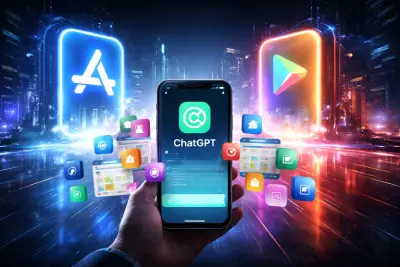
OpenAI Is Trying to Build a New App Store Inside ChatGPT.. But the Experience Has Not Yet Matured
Despite the enormous buzz that accompanied the launch of the ChatGPT apps ecosystem by OpenAI about six months ago, the results so far appear to fall far short of the expectations that surrounded the project at its outset. The idea, which was promoted as a step that could reshape the digital app market and open the door to direct competition with Google Play and the App Store, has not yet turned into a genuine threat to the traditional platforms.
From the very first moment, the project appeared highly ambitious; the goal was not merely to add new features to ChatGPT, but to transform it into a comprehensive central platform through which users could access multiple services and applications without leaving the conversation. Nevertheless, the current reality reveals that the gap between the idea and its execution remains wide, whether at the level of user experience, corporate support, or even the development environment itself.
What Are ChatGPT Apps and How Do They Work Inside the Platform?
The core concept behind ChatGPT apps relies on what can be described as "mini-applications" or smart integrations, where certain external services can operate within the conversation itself. Instead of the user leaving ChatGPT to open another application, it is theoretically supposed to allow them to obtain the service directly from within the AI interface.
For example, a user could inquire about flights, transportation services, design tools, or productivity apps, and then receive instant results or suggestions within the conversation. In theory, this idea is highly attractive because it saves time, reduces the number of steps, and turns ChatGPT into something resembling a "super app" or a smart hub for digital services.
In practice, however, this experience has not yet reached the level that would allow it to compete with traditional app stores or even partially replace them.
Why Have ChatGPT Apps Failed to Create the Expected Buzz?
Although OpenAI has made more than 300 integrations available inside ChatGPT with external applications and services, this number does not necessarily reflect actual success in everyday usage. The core problem is not the number of apps present within the platform, but rather their practical usefulness, the clarity of their use, and the ease of relying on them.
According to recent technical reports, many of these apps remain limited in functionality, and the way to access or launch them is not always clear to users. In many cases, the user may not even be aware that a particular service is available from within ChatGPT, or how to activate it correctly.
Consequently, one of the biggest current challenges is that discovery and exploration inside ChatGPT are still not smooth enough, which reduces the chances of widespread adoption, even if the idea itself holds great potential over the long term.
The User Experience Is Still Below Expectations
Among the most prominent reasons for the project's stumbling thus far is that the user experience inside ChatGPT apps is still incomplete. Instead of the user receiving a seamless end-to-end journey within the conversation, they often find themselves compelled to leave ChatGPT to complete the essential steps.
For instance, a user may be able to view flight prices, compare transportation options, or explore certain services from within ChatGPT, but as soon as they reach the step of booking, payment, or order confirmation, they are typically asked to navigate to the original app or external website.
This is where the real problem surfaces: if the user ultimately has to return to the main application to complete the process, the practical value of the integration inside ChatGPT becomes limited. To put it more plainly, the platform today offers an "exploration window" more than it serves as a "complete execution environment".
Why Don't Users Fully Trust Making Purchases Through ChatGPT?
Alongside the shortcomings in integration, there is another equally important factor: user trust. Even now, many people still approach the idea of completing purchases or sharing payment data through AI platforms with considerable caution.
Recent indicators suggest that more than half of users show additional hesitation when it comes to entering financial information or bank card details inside AI-powered environments. This reluctance is largely understandable, especially amid growing debate surrounding privacy, data security, the accuracy of intelligent systems, and the possibility of errors.
From this perspective, the problem with ChatGPT apps is not only technical, but also psychological and behavioral. Even if the technical infrastructure is capable of delivering the service, user trust remains a decisive factor that has not yet been resolved.
Native Apps Still Offer a Better Experience Than ChatGPT Apps
When comparing ChatGPT apps with the native applications available on Google Play and the App Store, the gap becomes clear. Traditional applications still outperform in several key respects, such as speed, stability, interface clarity, feature integration, and ease of completing complex operations.
This is not limited to travel or transportation apps alone; it extends to design apps, productivity tools, e-commerce platforms, financial services, and even collaborative work tools. In the majority of these categories, native apps still provide a more complete and professional user experience compared to what is currently available inside ChatGPT.
Therefore, the question is no longer simply: can ChatGPT add apps?
It has become: Can it deliver an experience that rivals or surpasses native apps?
And at this moment, the answer appears to be: Not yet.
Why Are Companies Hesitant to Strongly Support ChatGPT Apps?
On the other hand, large companies do not yet appear fully enthusiastic about turning ChatGPT into a primary channel for attracting customers or completing business transactions. The reason for this comes down to several strategic, commercial, and technical considerations.
First, the visits and referrals coming from ChatGPT remain limited compared to traditional channels such as search engines, led by Google, which still command the largest share of traffic, advertising, and digital discovery. Second, some companies fear granting OpenAI a broader role in controlling customer data, the service interface, or the payment experience.
For this reason, many brands prefer to keep ChatGPT in the role of a "support interface" or a "introductory channel" only, without allowing it to become a primary sales or execution point within their commercial ecosystem.
Companies Possess Advantages That ChatGPT Cannot Currently Match
In truth, companies and native applications possess a set of core elements that remain beyond the current capabilities of ChatGPT apps. These elements include advanced payment systems, real-time customer service, user identity verification, protection systems, ratings, reviews, subscriptions, and loyalty programs.
These are not peripheral advantages; they are fundamental to the success of any modern digital application. Therefore, even if ChatGPT is capable of facilitating access to some services, it still lacks the integrated commercial infrastructure that makes an application a self-sufficient platform.
In other words, ChatGPT may be good at suggesting a service or initiating an interaction, but it is not yet ready to become the primary platform for managing the full relationship between the user and the application.
Developers Also Face Real Challenges Inside the ChatGPT Platform
The obstacles do not stop at users and companies alone; they extend to developers who are trying to build or integrate their applications inside ChatGPT. A number of developers today are facing challenges related to slow approval processes, technical errors, weak analytical tools, and a lack of information about app performance.
These problems are highly impactful, because any successful app ecosystem requires a development environment that is robust, fast, clear, and scalable. If a developer feels that the platform does not provide them with the tools needed to understand their audience, improve their visibility, or measure their results, it is natural for them to hesitate before investing seriously in it.
Therefore, OpenAI does not only need to attract users; it also needs to convince developers that the platform is worth their time, effort, and resources.
App Discovery Inside ChatGPT Remains a Clear Weakness
Among the most prominent issues that developers also complain about is that app discovery inside ChatGPT is still limited and unreliable. Unlike what traditional app stores such as the App Store and Google Play provide, there is no ecosystem mature enough inside ChatGPT yet to help applications appear, rank, receive recommendations, and acquire users in a sustainable way.
This is an extremely important point, because the success of any app store depends not only on the presence of applications, but also on how easily they can be found. If a user cannot discover an app easily, or does not understand how to reach it, then the chances of using it will remain slim, no matter how good the idea behind it is.
Consequently, OpenAI faces here a challenge similar to what app stores faced in their early days, but with the difference that competition today is far fiercer and user expectations are much higher.
Can ChatGPT Become a Real Alternative to App Stores?
For now, it does not appear that the ChatGPT apps platform is capable of directly or imminently threatening Google Play or the App Store. Traditional stores still enjoy a very strong infrastructure encompassing advanced distribution systems, monetization tools, discovery mechanisms, stable development environments, and massive user bases.
Nevertheless, this does not mean the project has failed or ended. On the contrary, OpenAI may be in the process of building a completely different model from the traditional app store concept. Rather than the user searching for an app and then opening it, the AI itself may become the primary interface that suggests the appropriate service and invokes it automatically within the conversation.
If this model succeeds in the future, ChatGPT may not need to copy the App Store or Google Play experience literally; instead, it could create an entirely new category of intelligent apps.
OpenAI Is Betting on the Future Despite a Slow Start
Despite the slow current results, OpenAI affirms that the apps platform inside ChatGPT remains a pivotal part of its long-term vision. The company appears to be betting that AI will not merely be a tool for answering questions, but will become a primary gateway for digital interaction in the future.
This vision also comes at a time when competition is intensifying with major companies such as Google and Anthropic, in a race that is not limited to developing intelligent models alone, but extends to who owns the primary user interface for users.
From this standpoint, the success of ChatGPT apps will not be measured solely by the number of current integrations, but by their future ability to become a daily starting point for services, applications, commands, purchases, and productivity.
Conclusion: ChatGPT Apps Are a Promising Idea.. But the Road Is Still Long
In the end, it can be said that ChatGPT apps represent a highly ambitious idea that may redefine the way digital applications and services are used in the future, but they have so far not clearly succeeded in changing user behavior or threatening traditional app stores.
Users still prefer native apps, companies remain cautious, developers face challenges, and the usage experience inside ChatGPT remains less complete than required. Yet the experiment is still in its early stages, and the coming years may bring significant transformations if OpenAI can address the current obstacles.
In a digital world where tech news intersects with user interests through following Arabic websites and specialized blogs, alongside what is offered by Egypt stores and Kuwait stores and vitamin stores and foreign websites, with reliance on Mashhor website for social services.
And here, dear brothers and sisters, we have successfully completed our mission ✌


Other topics that may interest you:
The Top 5 Hidden Apps on iPhone to Boost Security and Productivity
A Significant Decline in the Use of ChatGPT and Gemini
New Malware Threatens Hundreds of Millions
Federal Investigation Uncovers Malicious Games on Steam
Google Launches Gemini to Turn Google Maps into a Smart Assistant