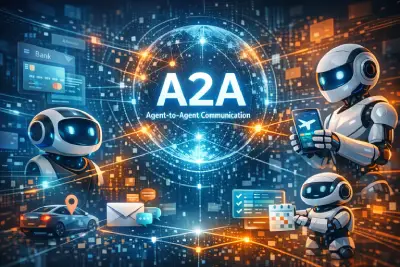
The A2A Protocol… A Step Toward AI Systems Communicating Directly
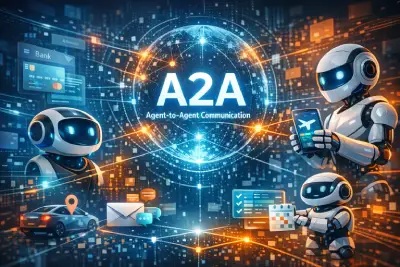
The A2A Protocol… A Step Toward an Era Where AI Systems Communicate Directly
The world of artificial intelligence is witnessing a new technical trend that paves the way for a different phase of digital interaction, through the development of a protocol known as "A2A" (Agent-to-Agent). This concept aims to enable AI systems to communicate and coordinate directly with one another, without requiring user intervention at every step of execution.
This trend came in response to growing observations about the limited integration between current applications and smart assistants, where users are forced to manually navigate between multiple services — such as voice assistants, messaging apps, and banking platforms — to complete a single task, which reduces the smoothness of the digital experience and increases the time and effort required.
AI That Collaborates Instead of Working Alone
The A2A protocol is built on a simple yet impactful idea: allowing intelligent systems to exchange data and commands directly and securely. Instead of the user being the link between each application, the intelligent systems take on the task of coordinating among themselves to achieve the desired goal.
For example, a user can ask their smart assistant to book an appointment and send a notification, and the system will automatically communicate with the booking app, then pass the details to the messaging app or calendar, without the need for any additional intervention.
Experts believe that this shift may move AI from a phase of executing individual commands to a phase of managing integrated tasks, where systems operate within a single ecosystem to achieve more precise and efficient results.
Practical Solutions for Everyday Usage Complexity
One of the most notable advantages of the A2A protocol is reducing the need to switch between applications and re-enter data multiple times. Direct integration between systems shortens the steps, saves time, and limits errors resulting from manual input.
This model also gives the user a smoother experience, where they only need to issue a single request, while the backend systems distribute roles and execute the task in full.
Future Impacts on Application Design
Expectations indicate that the widespread adoption of the A2A protocol may lead to a reformulation of how applications and digital services are built, so that they are designed from the outset to operate within an interconnected collaborative environment, rather than as separate tools.
The significance of this development lies in simplifying the management of digital life, reducing technical complexity, and enhancing the efficiency of smart services. With the evolution of security standards and privacy protection, the A2A protocol may represent a pivotal step toward a new era of integrative artificial intelligence, where systems cooperate to deliver the best possible user experience. To stay up to date with everything new, follow Arabic websites and specialized blogs, alongside what is offered by Egyptian stores and Kuwait stores and vitamin stores and foreign websites, while relying on Mashhor for social media services.
And with that, dear brothers and sisters, we have successfully completed the mission ✌


Other topics that may interest you:
OpenAI Launches Its First Hardware Product: Smart Earphones Powered by Artificial Intelligence
New Wave of Fraud Exploiting Apple Pay to Deceive Users Through Fake Messages