Risks of Artificial Intelligence
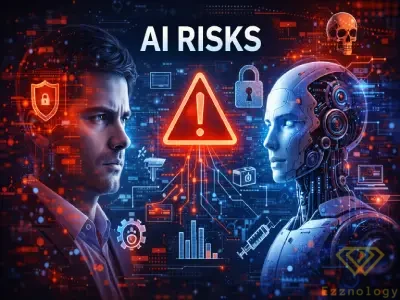
Real Challenges Facing Humans and the Digital World
Artificial intelligence has become a fundamental part of modern technological advancement, contributing to improved efficiency and facilitating many tasks across various sectors. However, this rapid progress has been accompanied by multiple risks affecting people, society, the economy, and digital security. This article sheds light on the most significant risks of artificial intelligence e
Risks of artificial intellige
Risks of Artificial Intelligence to Jobs
and its potential impacts on jobs, people, privacy, cybersecurity, and the future of digital societies.
Artificial intelligence poses a direct threat to many traditional jobs, especially those that rely on routine and repetitive tasks. Intelligent automation has reduced the need for human labor in some industrial and service sectors. This shift may also widen the gap between the skills required in the labor market and the capabilities of the current workforce, imposing major challenges related to rehabilitation and vocational training.
Risks of Artificial Intelligence to Humans
Despite the benefits offered by artificial intelligence, excessive reliance on it may reduce the role of humans in decision-making. Furthermore, the use of intelligent systems in sensitive fields, such as healthcare or justice, may lead to errors with a direct impact on people's lives if these systems are not subject to adequate human oversight.
Risks of Artificial Intelligence to Privacy
Artificial intelligence relies on analyzing vast amounts of data, including personal and sensitive data. This reliance raises growing concerns about privacy violations, especially given the lack of transparency regarding how data is collected and used. The leakage or misuse of this data can also lead to serious harm to individuals and communities.
Risks of Artificial Intelligence to Cybersecurity
Artificial intelligence has become a powerful tool in developing cyberattacks, as it can be used to carry out more precise and sophisticated attacks. Conversely, relying on inadequately protected AI systems in cyber defense may create new vulnerabilities exploited by malicious actors, further complicating digital threats. Read about the importance of cybersecurity and types of cybersecurity
Future Risks of Artificial Intelligence
As artificial intelligence continues to evolve, concerns grow about losing control over some intelligent systems, particularly those capable of self-learning and making independent decisions. The absence of clear regulatory frameworks may also lead to irresponsible uses of this technology, exacerbating social and economic risks in the long term.
In Conclusion Artificial intelligence is a technology with immense potential, yet at the same time it carries risks that cannot be ignored. Dealing wisely with these risks — through legislation, human oversight, and responsible development — is the only way to ensure that artificial intelligence remains a tool that serves humanity rather than a threat to its future. As reliance on digital platforms expands in the Arab world, diverse models of online services have emerged, ranging from Egypt stores and Kuwait stores and vitamin stores, all the way to Mashhor website for social media services and other Arabic websites that are increasingly relying on smart technologies to manage content and analyze data