What is Deep Search in AI Models and Will It Revolutionize the World of Research

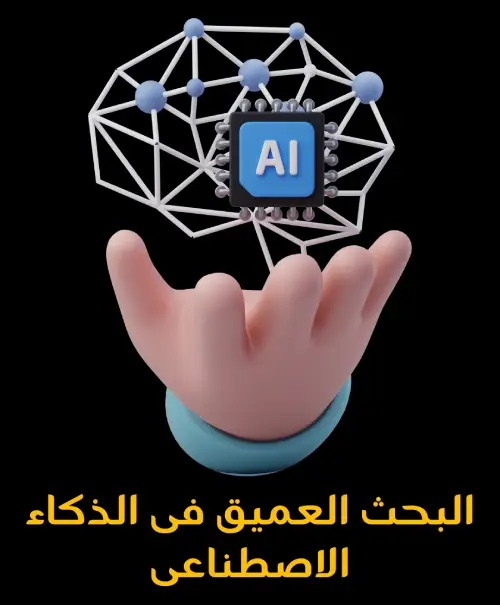
What is Deep Search in AI Models and Will It Revolutionize the World of Research
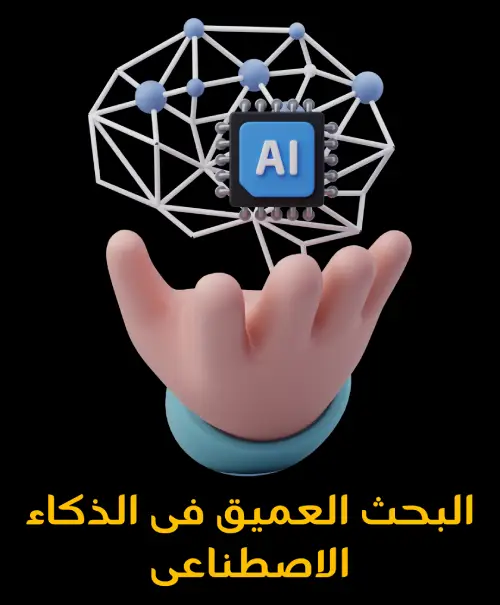


What is Deep Search in AI Models and Will It Revolutionize the World of Research

The Revolution AI Has Brought to Research
With the emergence of Artificial Intelligence (AI) and Natural Language Processing (NLP) technologies, search operations have undergone a radical transformation — shifting from a keyword-based model to one capable of understanding context and analyzing human intent. Algorithms no longer simply match text; they now break down queries into their semantic components, infer relationships between concepts, and generate structured answers rather than mere links.

Key Improvements Introduced by AI:

  1. Deep Contextual Understanding:
    Models such as BERT (from Google) and GPT (from OpenAI) have enabled search engines to interpret queries in a more human-like manner. For example, the system can distinguish between the meaning of the word "Apple" in the sentence "Apple fruit is healthy" versus "Apple company launches a new product" based on context.
  2. Generative Responses:
    Instead of displaying a list of websites, some platforms (such as Bing Chat and Google SGE) now provide direct answers synthesized from multiple sources, accompanied by references.
  3. Intelligent Personalization:
    AI algorithms analyze past user behavior (such as previous searches and geographic location) to deliver results more relevant to their actual needs.

Fourth: Deep Search from OpenAI – A Quantum Leap in Information Retrieval
"Deep Search" from OpenAI is considered the latest embodiment of advanced AI technologies, combining the capabilities of Large Language Models (LLMs) with automated search tools to independently execute complex tasks.

Features of Deep Search That Distinguish It from Traditional Systems:

Criterion Traditional Search Deep Search
Task Scope Retrieving relevant links. Executing multi-step research tasks (such as comparisons and critical analysis).
Data Sources Relies on the indexed web. Integrates public, academic, and even unpublished sources.
Answer Depth Superficial or fragmented information. Comprehensive reports with correlational analysis and evidence-backed conclusions.
Adaptability to Complexity Limited in handling ambiguous queries. Breaks complex queries into sub-questions and assembles answers in a logical sequence.

Innovative Use Cases for Deep Search:

  • Academic Research: Analyzing hundreds of research papers in minutes and summarizing conflicting findings in a given field.
  • Decision-Making Support: Comparing investment options based on analysis of market trends and financial reports.
  • Fact-Checking: Tracing the origin of claims and evaluating their credibility across multilingual sources.

Fifth: Challenges and Ethical Considerations
Despite the immense potential, relying on systems such as Deep Search raises questions about:

  • Data Bias: Models may reproduce biases present in the data they were trained on.
  • Transparency: The difficulty of tracing how the model arrives at its conclusions, especially in highly complex tasks.
  • Job Displacement: Automating research tasks may impact human roles (such as junior analysts).

Toward a Future That Redefines "Research" Itself
Online search is no longer merely a tool for finding information; it has transformed into an intelligent partner capable of critical thinking and innovation. As models like Deep Search evolve, we may soon witness systems that conduct independent research, propose scientific hypotheses, or even rediscover lost knowledge buried in digital archives.

However, success in this future requires a delicate balance between the power of AI and human oversight, to ensure that these tools remain servants of humanity rather than controllers of it.


The Future: Trends and Expectations in the AI-Powered Research World

1. Integration with Emerging Technologies: IoT and Blockchain

As AI development accelerates, advanced search systems are expected to merge with other technologies to create revolutionary solutions:

  • Internet of Things (IoT): Data from smart devices (such as cars or home appliances) may be used to personalize search results based on the user's real-world context. For example, a search engine might provide personalized health advice based on fitness data recorded by a smartwatch.
  • Blockchain: Blockchain technology can be used to enhance the credibility of information by documenting data sources and tracking modifications, thereby reducing the spread of fake content.

2. Generative AI as a Personal "Virtual Researcher"

Systems like Deep Search will evolve into personal assistants capable of:


3. The Challenge of Balancing Efficiency and Privacy

As the personalization of search results deepens, ethical concerns and regulatory aspects emerge:

  • Data Protection: How can we ensure that personal data is not exploited to improve algorithms?
  • Transparency: The necessity of requiring companies to disclose how AI models are trained and the sources of their data.
  • Carbon Footprint: Large AI models require enormous amounts of energy, prompting companies to seek sustainable solutions (such as optimized algorithms that reduce consumption).

4. Redefining Human Roles in the Age of Intelligent Search

Despite AI's ability to automate routine tasks, human skills remain critical in:

  • Critical Verification: Evaluating the credibility of AI conclusions and avoiding "hallucination" or bias.
  • Strategic Creativity: Transforming abstract ideas generated by AI into concrete action plans.
  • Ethics: Establishing a legislative framework that ensures these technologies are used to serve the public good.

5. Sectors Set for Radical Transformation

Sector Impact of Advanced Search
Healthcare Diagnosing diseases by comparing a patient's symptoms against thousands of global cases in seconds.
Education Providing customized learning plans based on analysis of a student's weaknesses.
Economics Analyzing economic trends in real time to forecast stock markets.
Media Detecting fake news by evaluating the credibility of sources and identifying conflicting data.

Conclusion: Toward a Balanced Human-Digital Partnership
AI is no longer merely a supporting tool; it has become a partner capable of reshaping the way we acquire knowledge. Nevertheless, true success lies in building a bridge between human and artificial intelligence, where each complements the other. While AI provides speed and precision, humans ensure creativity and ethical responsibility. The future belongs to those who can harness these technologies to enhance human potential, not replace it.

And with this, dear brothers and sisters, we have successfully completed the mission ✌

Do not forget our brothers and sisters everywhere in your prayers 📌

Best regards from the #Ezznology #Ezz_Technology team

You can also browse our store's products from here 👈#our store 🌷 or here


To join our family on the Telegram group click 👈 here

Also join our Facebook group where we share information and help members 👈 here

To subscribe to our newsletter on Google News click here✌👇

Ezznology on Google News

Or scan the code

Ezznology on Google news


Others were also interested in:

Facebook Will Delete Live Stream Videos 30 Days After Publishing

How to Replace a Face Using Artificial Intelligence

The Firefly Tool for Generating Video Clips with AI from Adobe

How to Increase CPM Rate and Profits on Your Website or Blog

iOS 18.3.1 for All Users — You Must Update Urgently!