TCP / IP is how devices connect and transfer packets over the Internet.
What are IP and TCP?
The Internet Protocol (IP) is the Internet addressing system and has the primary function of delivering information packets from the source device to the target device. IP is the primary method by which network connections are made, and it establishes the foundation of the Internet. IP does not handle packet requests or error checking. This function requires another protocol, most often the Transmission Control Protocol (TCP).
Also:
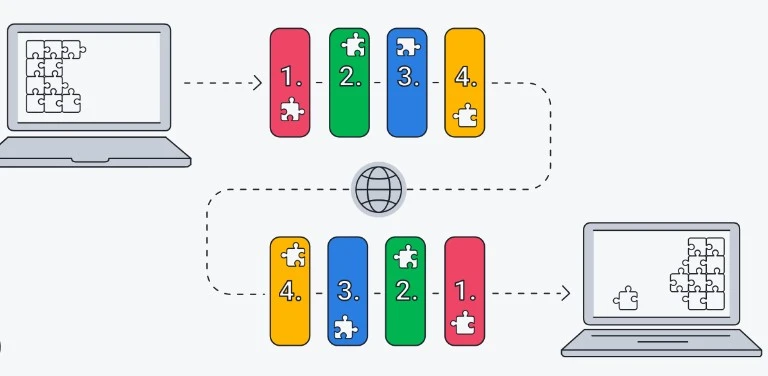
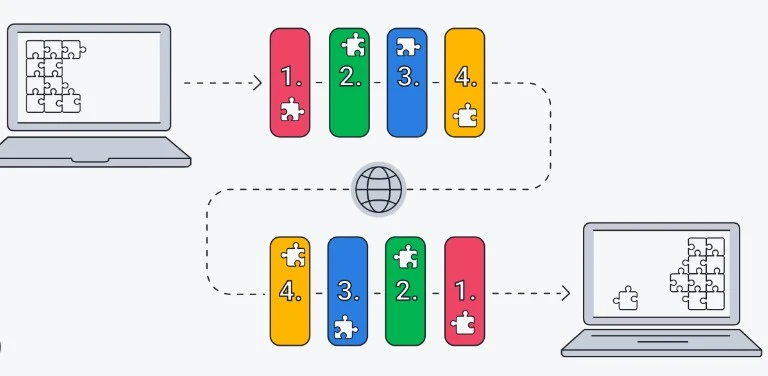
The TCP/IP relationship is similar to sending a letter written on a puzzle via mail to someone. The letter is written and the puzzle is divided into pieces. Each piece can then travel via a different postal route, with some taking longer than others. When the puzzle pieces arrive after traversing their different paths, the pieces may be out of order. IP ensures that the pieces reach their destination address. TCP can be thought of as the puzzle assembler on the other side who puts the pieces together in the correct order, requests the re-sending of missing pieces, and lets the sender know that the puzzle has been received. TCP maintains the connection with the sender from before the first puzzle piece is sent until after the final piece is sent.
Also:
IP is a connectionless protocol, meaning that each data unit is processed individually and routed from the source device to the target device, and the target does not send an acknowledgment back to the source. This is where protocols such as TCP come in. TCP is used in conjunction with IP in order to maintain the connection between the sender and the target and to ensure packet ordering.
For Example
, when an email is sent over TCP, a connection is established and a three-way handshake is performed. First, the source sends a SYN packet “initial request” to the target server in order to initiate the dialog.
The target server then sends a SYN-ACK packet to approve the process.
Finally,
the source sends an ACK packet to the target to confirm the process, after which the message contents can be sent.
The email message is ultimately divided into packets before each packet is sent to the Internet,
where it traverses a series of gateways before reaching the target device
where the set of packets is reassembled by TCP into the original contents of the email.