What is the User Datagram Protocol (UDP / IP)?
The User Datagram Protocol (UDP) is a communication protocol used on the Internet to transfer data quickly and efficiently. It is used especially for applications that require real-time data transfer, such as video streaming and DNS lookup operations.
UDP speeds up the communication process by not establishing a formal connection before transferring data. This allows data to be transferred at extremely high speeds. However, UDP can also cause packet loss during transmission, which creates opportunities for exploitation in the form of DDoS (Distributed Denial of Service) attacks.
DDoS attacks exploit this weakness in UDP by sending a large number of spoofed packets to the target device, causing increased pressure on resources and disrupting service. Therefore, software developers and security administrators must take measures to protect the system from these attacks by implementing security procedures, validating inputs, and countering security threats.
How does UDP work?
UDP is a standard communication protocol used to transfer data across networks. It differs from other protocols in its simple and uncomplicated way of transferring packets (data units) directly to the target device without establishing a prior connection, verifying sequence, or confirming that packets are delivered in the proper order.
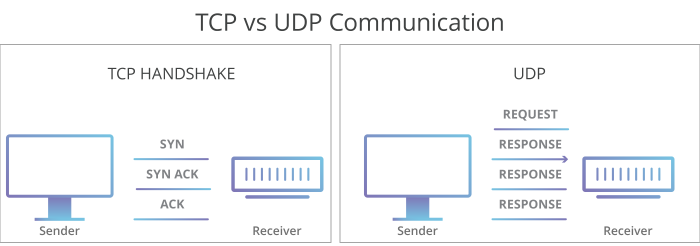
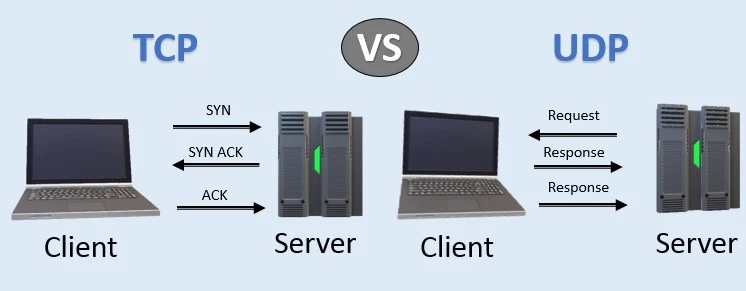
UDP is considered faster but less reliable compared to the TCP protocol, which is another popular transport protocol. In a TCP connection, a connection is established between the connected devices through a process known as a “handshake,” after which packets are transferred between devices.
In short, UDP provides speed in data transfer while TCP ensures correct delivery and ordering of data. UDP is used in cases that require transfer speed without concern for potential packet loss, while TCP is preferred in cases that require ensuring data is delivered correctly and in order.
Also:
UDP connections do not go through this process. Instead, a computer can simply start sending data to the other: