Your Voice May Be Your New Digital Vulnerability
Your Voice May Be Your New Digital Vulnerability… How Can Law and Technology Protect It?
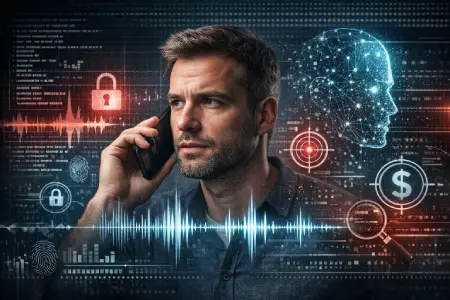
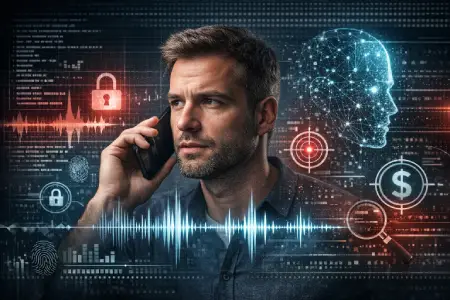
Voice is no longer merely a means of communication — it has become a rich source of personal data that can be analyzed and exploited. The rapid advancement of AI technologies, particularly speech-to-text systems and voice signal processing, has revealed that your tone of voice, your speaking pace, and even your breathing pattern while talking can carry far more information than you might imagine.
What Can Your Voice Reveal?
Recent studies indicate that algorithms are capable of inferring:
-
Educational level and social background
-
Psychological state or momentary mood
-
Profession and economic status
-
Political orientations
-
Potential health indicators (such as chronic stress or neurological disorders)
While a human can pick up on obvious signals such as anger or joy, intelligent systems are capable of analyzing hundreds of subtle characteristics in fractions of a second, with a level of precision that surpasses human perception.
Hidden Risks: From Price Manipulation to Discrimination
The danger lies in the fact that this data may be used for unethical purposes, such as:
-
Discriminatory pricing: Raising insurance premiums or service prices based on economic indicators inferred from the voice.
-
Unfair classification: Evaluating customers or employees based on hidden analyses of their vocal qualities.
-
Harassment and digital tracking: Exploiting voice characteristics to identify individuals or target them across multiple platforms.
With the widespread proliferation of voice assistants and call centers that record calls "for quality purposes," every person now has a digital voice archive that may be as important — and as dangerous — as their biometric fingerprint.
Has the Exploitation Already Begun?
So far, there are no publicly documented cases of large-scale use of these technologies for malicious purposes, but experts warn that the technical infrastructure is now ready.
For example, tools are being developed to detect anger and toxic behavior in gaming and call centers — uses that may be ethically beneficial. However, the same technology can be redirected toward far more controversial objectives.
The Neurological and Psychological Dimension
Neuroscience research confirms that humans respond to vocal tone and rhythm before processing the words themselves. This means the effect of voice transcends language and triggers a direct physiological response. This is what makes voice analysis a powerful tool for behavioral influence — or even unconscious manipulation.
How Can You Protect Your Voice?
The proposed solutions fall into two tracks: technical and regulatory.
First: Technical Solutions
-
Developing systems that convert speech to text without storing the original recording.
-
"Data minimization" techniques so that only the minimum amount of information necessary to complete a service is transmitted.
-
Voice Masking tools that slightly distort or alter the voice to protect biometric characteristics without affecting speech clarity.
-
Strong encryption of voice recordings and prevention of their reuse outside the stated purpose.
Second: The Regulatory Framework
-
Classifying voice as sensitive biometric data within data protection laws.
-
Requiring companies to be transparent about how voices are analyzed and how analysis results are used.
-
Granting users the right to request permanent deletion of their voice recordings.
Specialized research groups have already been established to study the security and privacy of voice communications, with the aim of measuring the amount of information contained in speech and setting standards for its protection.
The Real Challenge
The ethical dilemma here is clear:
The same technology can improve services and make them more personalized, yet at the same time it may open the door to a new form of silent surveillance.
With the accelerating pace of digital transformation worldwide — especially in fast-growing technology markets — the issue of protecting voice data has become no less important than protecting financial or health data. Just as Egyptian stores, Kuwaiti stores, and vitamin stores compete to offer smarter digital services, and as Arabic websites, blogs, and even well-known social media service platforms rely on data analysis technologies to improve the user experience, the challenge remains striking a balance between innovation and privacy protection.
In Conclusion
Your voice is not merely a means of expression… it is a living biometric fingerprint.
As AI advances, societal awareness, regulatory oversight, and responsible technical design become essential elements to ensure that progress does not turn into a hidden threat.
The question is no longer: Can your voice be analyzed?
It has become: How do we ensure this analysis is not used against you?
For everything new, be sure to follow Arabic websites and specialized blogs, alongside what is offered by Egyptian stores and Kuwaiti stores and vitamin stores and foreign websites, along with relying on Mashhor for social media services.
And with that, dear brothers and sisters, we have successfully completed the mission ✌
Send blessings upon the Prophet, and your hearts will be at peace — do good no matter how small 🎯🌷
And do not forget our brothers and sisters everywhere in your prayers 📌
Regards from the team of #Ezznology #Ezz_Technology
You can also browse our store's products from here 👈#our store 🌷or here
To join our family on the Telegram group click 👈here
And also the Facebook group where we share information and help members 👈here


Other topics that may interest you:
OpenAI Launches Its First Hardware Product: Smart Earbuds Powered by AI
A New Wave of Fraud Exploiting Apple Pay to Deceive Users via Fake Messages
Snapchat Ignites Web Summit Qatar 2026
With Advanced Augmented Reality Experiences and AI-Powered Spectacles Glasses